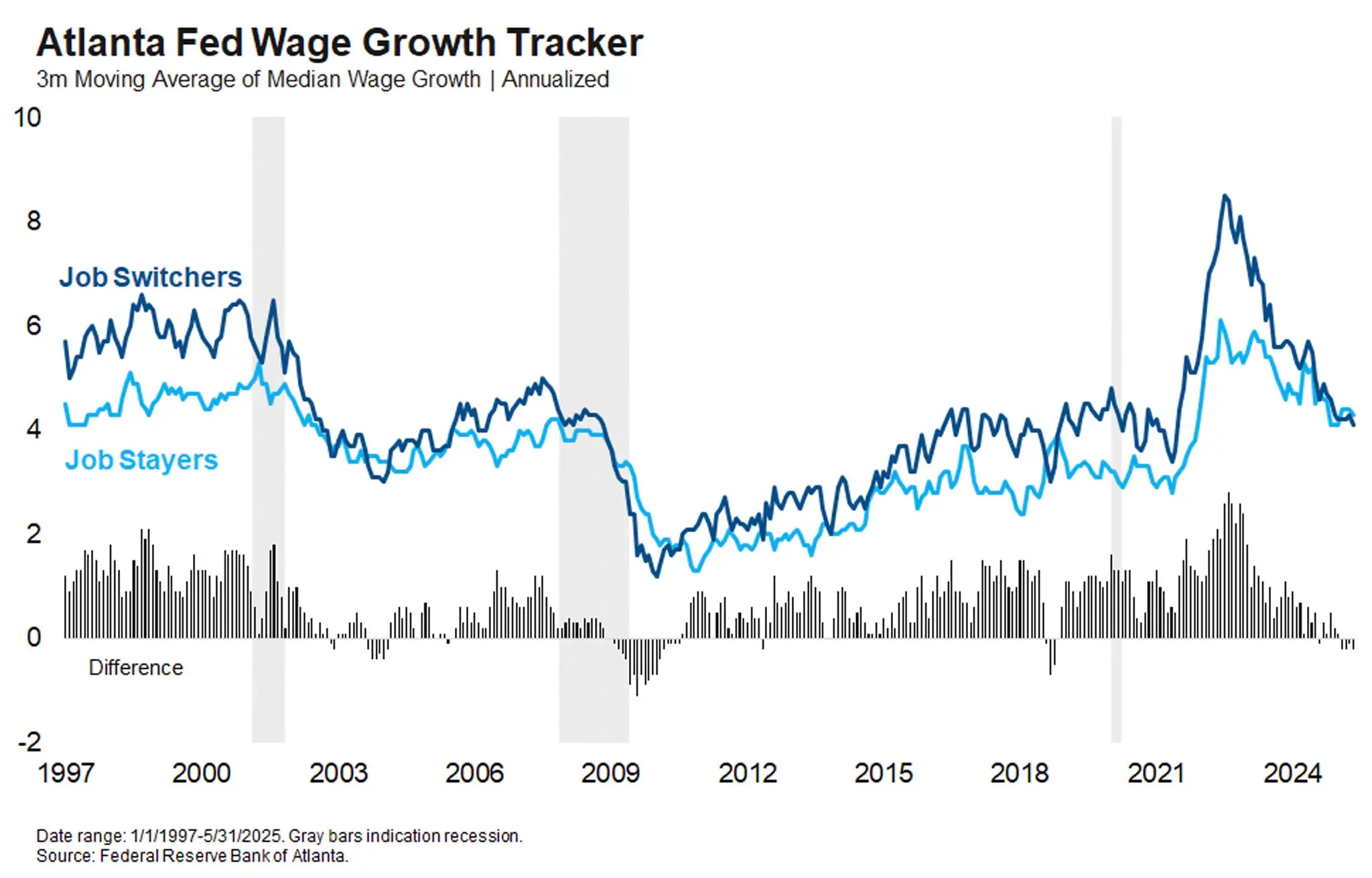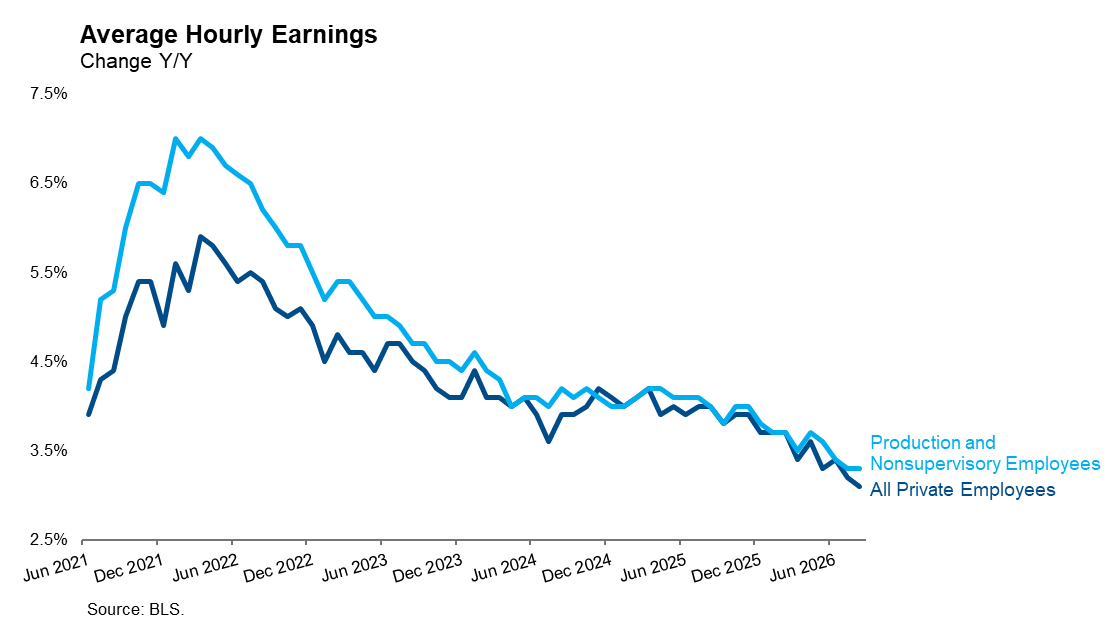



In recent notes, we have highlighted elements of underlying weakness in an otherwise stable labor market. The Atlanta Fed released another such data point this week. Their Wage Growth Tracker improves upon the average hourly earnings data released with each monthly payrolls report by adjusting for compositional changes and calculating wage growth across a variety of demographic and occupational cohorts. One of our favorite indicators is the relative wage inflation between workers who stay with their current employer and those who switch to a new employer.
Job switchers generally enjoy higher wage growth than job stayers because many of the switchers do so explicitly in pursuit of higher wages. The returns to job switching (the difference between wage growth for switchers and stayers) vary across the business cycle and provide an indication of the tightness of the labor market. As the chart below shows, returns to job switching hit an all-time high in 2022 amidst the most extreme labor shortage in postwar American history.
Those returns have now evaporated, with stayers actually enjoying higher wage growth than switchers in recent months. This inverted relationship is quite rare, occurring in just 36 out of the 341 months in the history of the Wage Growth Tracker, with half of those in the aftermath of the GFC. This decline from an all-time high to the rare inversion demonstrates the degree to which the labor market has softened in recent years. Workers are switching jobs not from a position of strength where they can negotiate higher wages, but rather from a position of weakness where they are willing to accept smaller wage gains. Bargaining power has swung from workers to employers. Remote workers are increasingly being ordered back to the office. Fewer workers are quitting. Employers are hiring more cautiously. It is hard to imagine wage inflation reaccelerating until this dynamic changes.