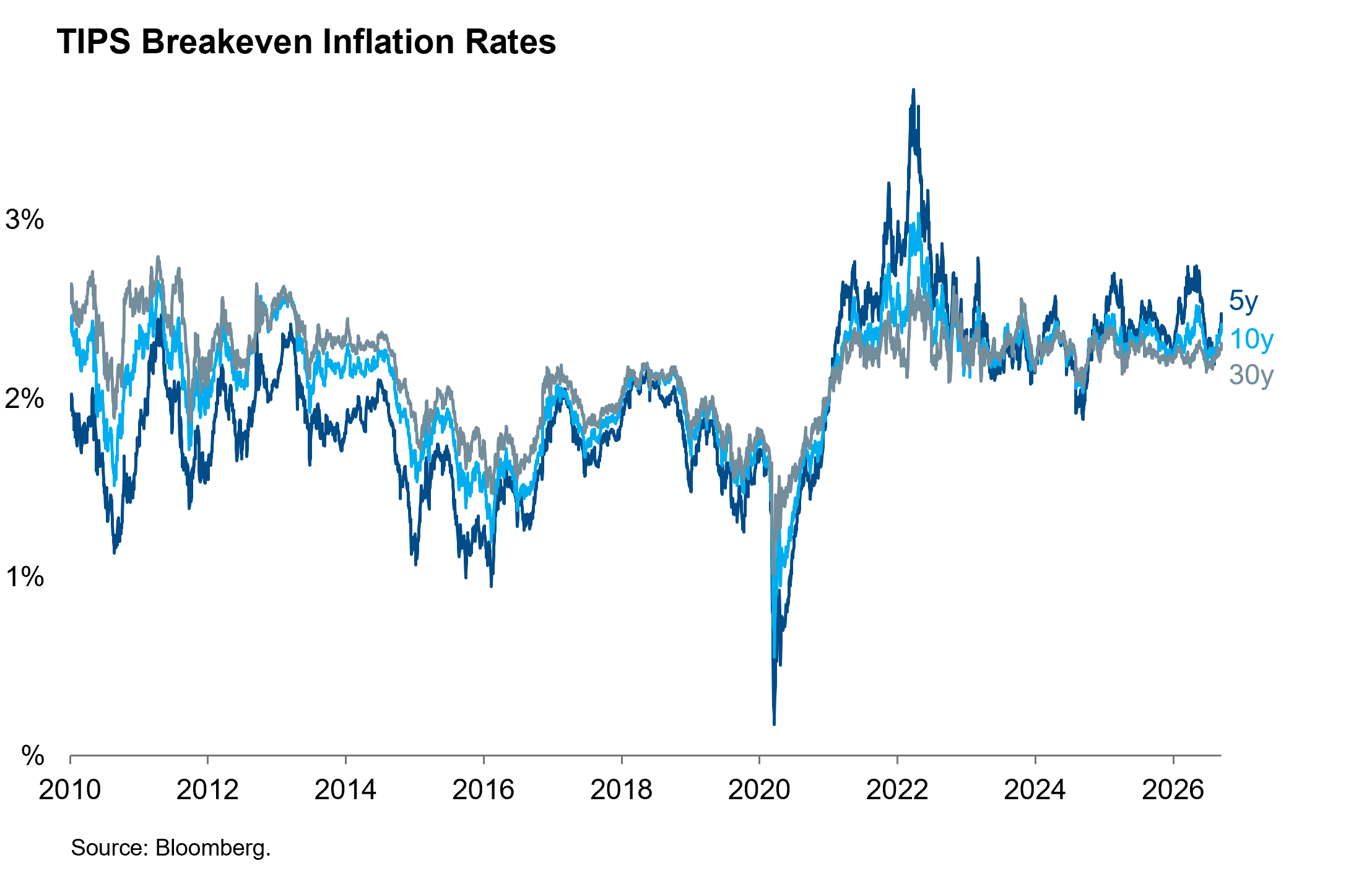


Consumer prices rose 0.07% m/m in July, weighed down by a 1.48% decline in energy prices. The Iran war is driving sustained volatility in retail gasoline prices, the largest component of the energy basket. A decline in gasoline prices in July may seem counterintuitive to those who recently filled their tank, but bear in mind that CPI measures the average price across the entire month. Core CPI rose by 0.215% m/m, which will not resolve the animated debate heading into the September FOMC meeting. Housing continued on its path of gradual disinflation, which is unexciting but central to our benign inflation view, as housing is 45% of the core index. Non-housing services has been the wild card of late: volatile and difficult to discern an underlying trend. This component rose 0.19% m/m this month after declining by a similar magnitude in June.
Core goods prices rose 0.198% m/m, reflecting a new source of inflationary pressure from the passthrough of AI semiconductor demand to consumer electronics prices. Prices for computers, peripherals and smart home assistants rose 3.5% in July. This probably reflected price increases announced by Apple and Xbox in late June, which we do not expect to recur in the coming months. While we acknowledge that AI-driven demand for computer equipment is a source of upside risk for CPI inflation, we continue to believe that this risk is limited by the small weight of these components in the index. And, thankfully, this new source of goods inflation is arriving just as tariff-induced inflation is winding down.
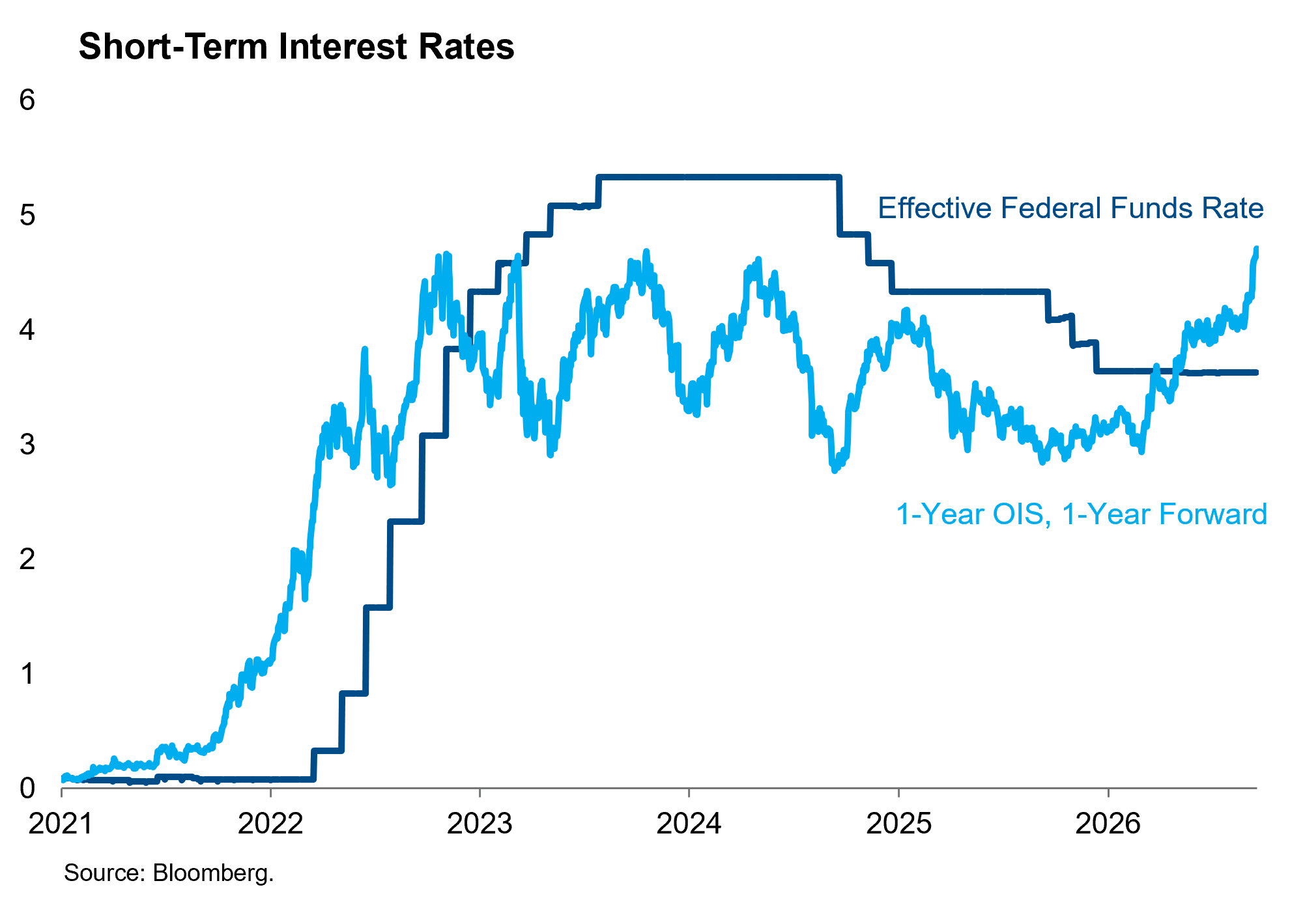
Given the blowback from the July FOMC meeting and Chairman Warsh’s refusal to clarify his thinking, the stakes for this CPI report were high. Unfortunately, the data are inconclusive for the policy debate. The core CPI reading for July was neither hot enough to force a hike nor cold enough to build confidence in the disinflation narrative. While we still see encouraging signs for the underlying inflation trend, today’s report is unlikely to flip any votes on the FOMC, which will receive one more payrolls report and one more CPI report before the next meeting. The odds of a September hike had risen as high as 72% before the weak July payrolls data and have fallen to 40% after today’s CPI print. This report leaves the Fed in limbo heading into Jackson Hole, though Chairman Warsh does not appear uncomfortable with market pricing bouncing around 50%.
Looking back over the past 18 months, we still believe this is an accurate description of the monetary policy debate:
- Price stability was once again within reach as of February 2026, just as it was in March 2025. Another negative supply shock (Iran war) raised inflation, just as the last supply shock did in April 2025 (trade war).
- FOMC dove case: underlying inflation trends still look disinflationary, the end of the war will get us back on track towards price stability, rate hikes cannot address a supply shock, and now we have to be a bit worried about the labor market after the last payrolls print.
- FOMC hawk case: four sequential supply shocks means we don’t have the luxury of being patient, our job is price stability regardless of the cause, five years of missing the target is enough to threaten the stability of inflation expectations, there is always the risk of another supply shock even after the Iran war ends.
We continue to find the dove case more convincing and believe that the Hold and Hope Caucus constitutes a majority of FOMC voters. We maintain our view that the Fed will leave rates unchanged all year and that the next move is more likely to be a cut than a hike. That is a modal expectation, and there is no denying the binary risk from the Iran war and energy prices. An extended war and persistently high energy prices would eventually exhaust the Fed’s patience and force a hike. The odds of that happening at the September meeting are slightly lower due to the July CPI print.