

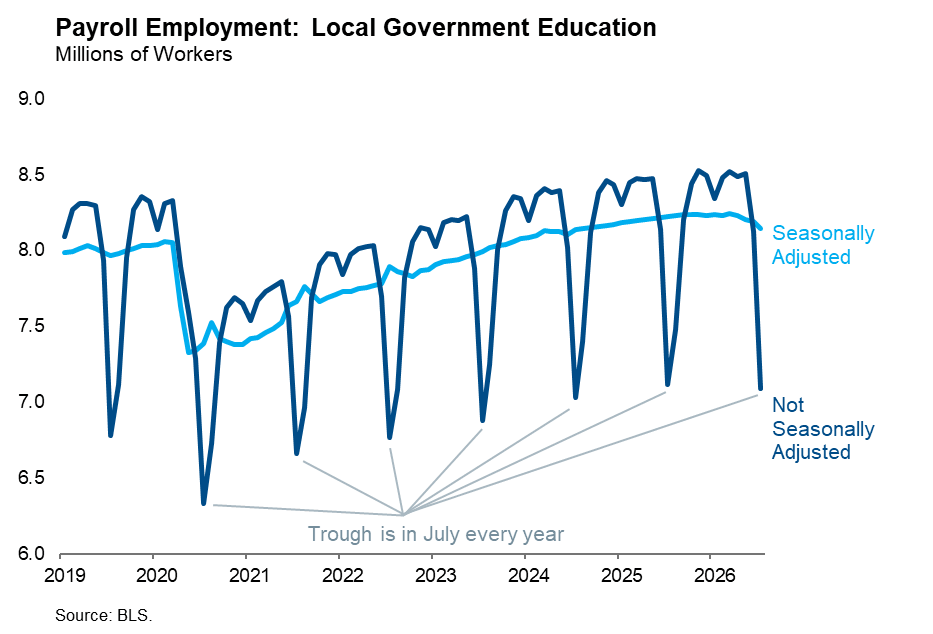
The July payrolls report printed below expectations and weakened the case for a rate hike at the September meeting. The U.S. economy lost 23,000 jobs in the month of July, the net result of a 30,000 increase in private payrolls and a 53,000 decline in government jobs. The decline in government payrolls was explained by local government education. This sector is one of the most seasonal in the labor market, as one might expect given the school calendar, and seasonal adjustment factors have been noisy since the pandemic. But even the not-seasonally-adjusted decline was larger than most years, so the July result could reflect a reduction in summer school attendance resulting from funding cuts to the Department of Education.
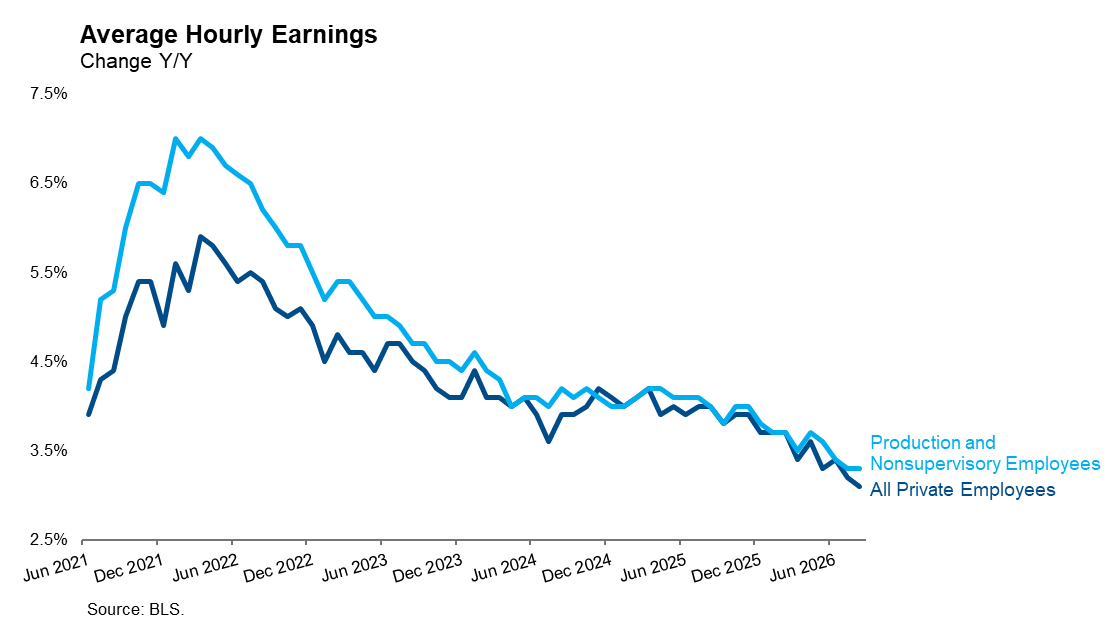
Leisure and hospitality shed jobs (possibly an early indication of a World Cup hangover), while healthcare exhibited strong growth once again. The one-month diffusion index declined for the third straight month and shows that 51.8% of industries created jobs in July. Payroll employment in the prior two months was also revised lower by 103,000, undercutting some of the labor market optimism from the springtime. Average hourly earnings rose by 0.05% in the month, the weakest rate of wage growth since April 2025, and the second weakest since the pandemic. The unemployment rate declined by a tenth of a percentage point to 4.1%. However, this was caused by a decline in the labor force participation rate, so it is not a positive sign for the labor market.
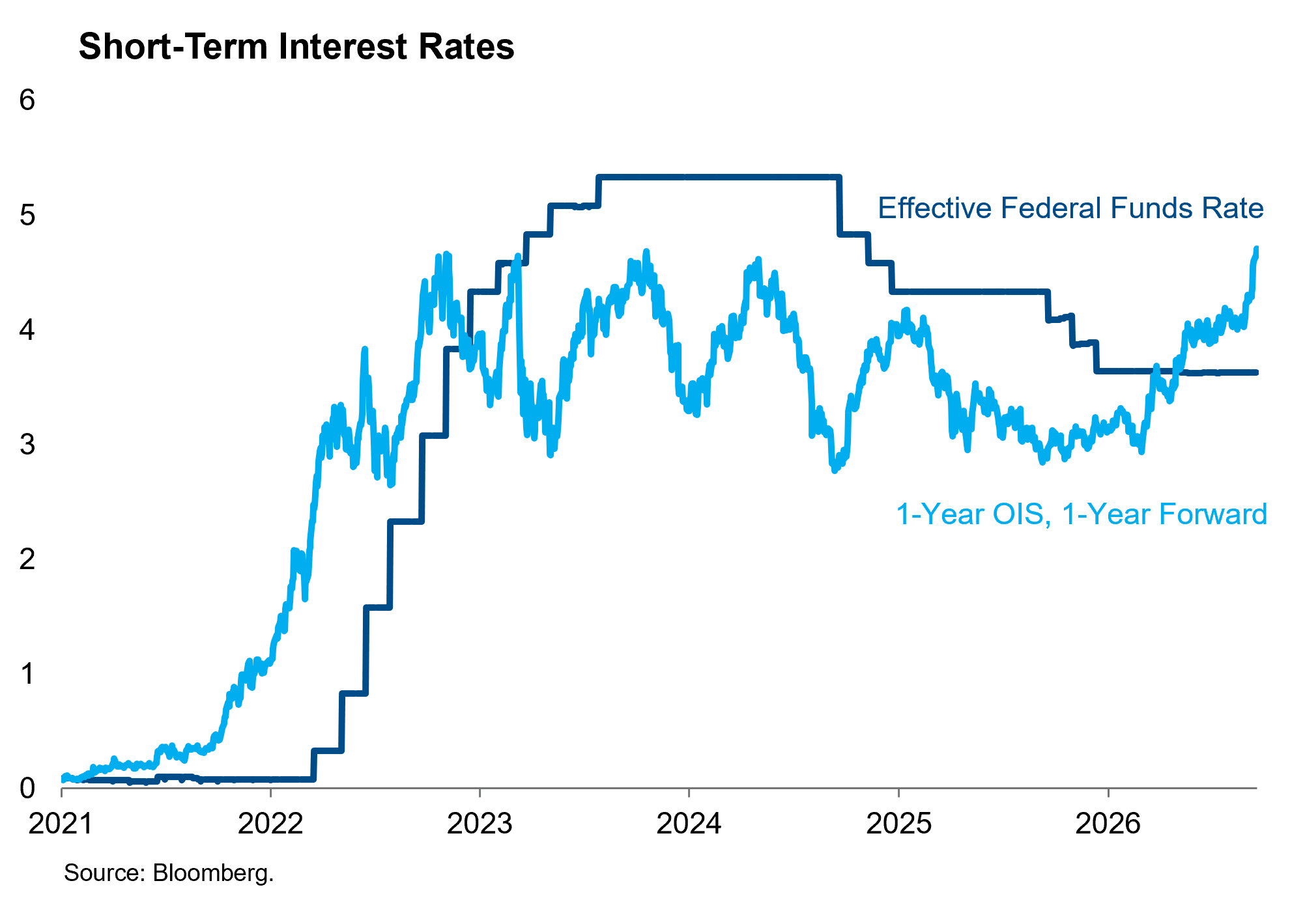
While inflation remains the Fed’s primary focus, we believe this report reduces the likelihood of a rate hike in September. Those odds had been as high as 75% this week but fell to 45% after the print. With labor supply still constrained by immigration policy, low or negative payroll prints are to be expected. We still believe the labor market is stable, but today’s print moves the needle slightly towards the risk of a more concerning slowdown and therefore increases the chance that a near-term rate hike might later be regretted by the FOMC. The gap between the July and September FOMC meetings is always the longest of the year, so the Fed will get to see one additional payrolls print and two CPI prints before their next meeting.
This report is a win for what we’re calling the Hold and Hope Caucus, those FOMC members who favor holding rates steady while hoping that the war concludes soon and allows energy prices to normalize without causing a broader inflation problem. We believe that this group presently includes both Chairman Warsh and a majority of FOMC voters. While a prolonged Iran war could sustain high energy prices and cause the Fed to lose patience, we maintain our modal expectation that the Fed will leave rates unchanged this year and the next move will be a cut in March 2027.