

 Subscribe
The Fed appears likely to hike rates at this week’s policy meeting. We think this is a mistake. The proximate catalyst was the August CPI report, which appeared hot on the surface but was distorted higher by one idiosyncratic component. Core CPI increased by 0.29% in the month, but 0.097% of that increase was due to a single component: wireless telephone services. This was the largest monthly contribution in the history of this component back to 1998—a 7-standard-deviation surprise for those keeping score at home. It was likely caused by price increases announced by AT&T last month. While this is a genuine increase in the price level, history shows that these wireless plan price increases are infrequent, so it does not reflect an underlying inflation trend that is likely to persist in the months ahead.
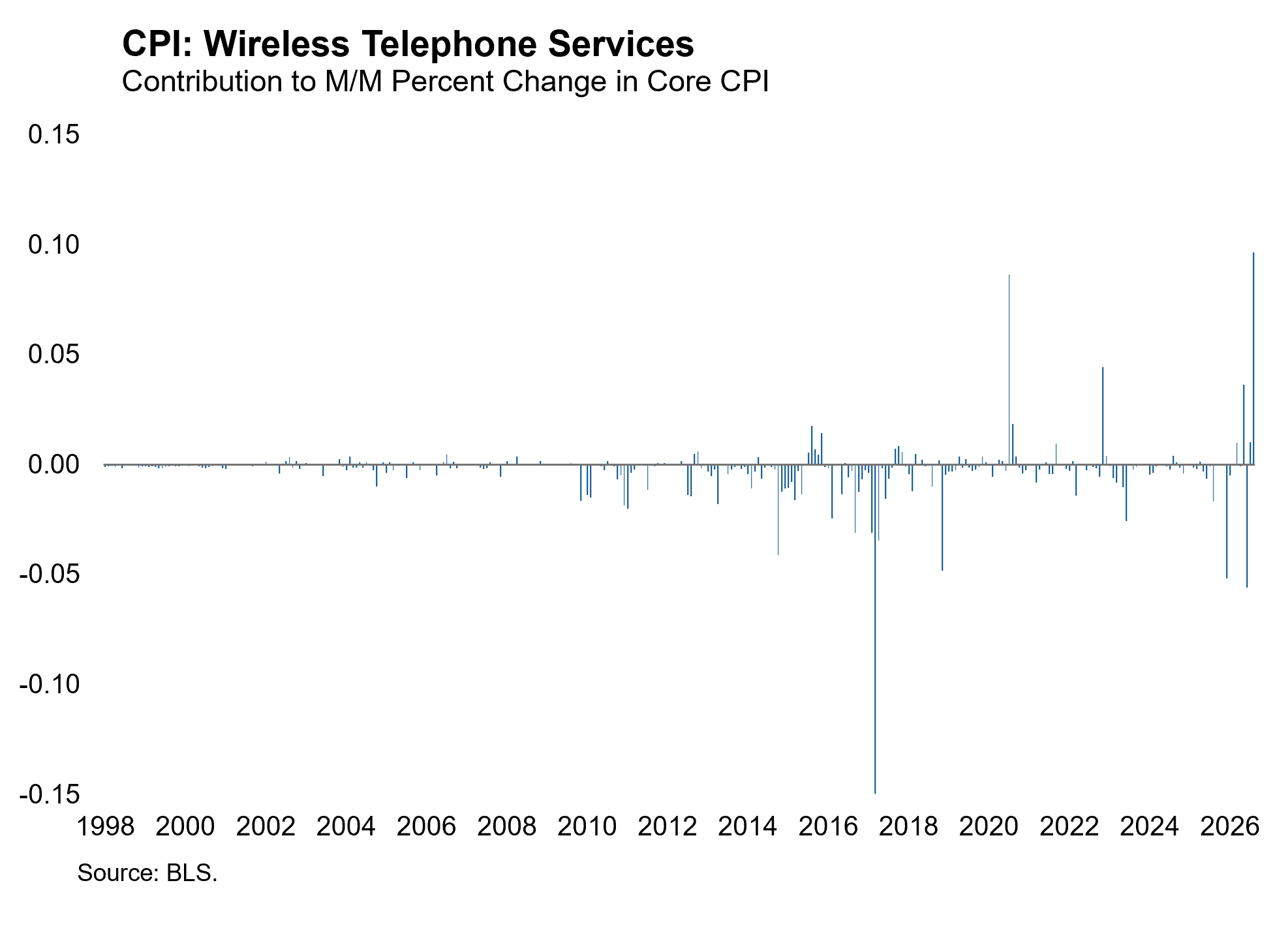
Had this component printed anywhere near its historical average, core CPI would have increased by 0.19% m/m, and we would be having a very different conversation about this week’s FOMC meeting. This outcome shows the folly of tying a monetary policy decision so closely to a single data point in an inherently volatile series. Alas, Governor Waller did exactly that in his recent speech, and we now expect him to lead other swing voters to support a hike this week. Combined with the three committed hawks, this group likely forms a majority on the FOMC. We expect Chairman Warsh to grudgingly join his colleagues in a unanimous vote. We had previously expected the Fed to remain on hold in 2026 and cut rates in 2027.
An Unnecessary Hike
If we were in the FOMC boardroom this week, we would argue against a rate hike. The Fed was on the verge of achieving a miraculous soft landing in early 2025 before tariffs and energy inflation delayed that victory. We believe those effects will fade to reveal a favorable underlying inflation trend. Tariff inflation has already come and gone. Demand-pull inflation from the AI infrastructure buildout is real, but the impact on consumers will be limited. Information technology goods—which includes computers, smartphones, software and other consumer electronics exposed to AI inflation—carry just a 0.75% weight in CPI. Contrast that with housing, which accounts for 35% of CPI and is enjoying a multiyear disinflationary trend with strong inertia. Given the state of the labor market, there is little risk of a wage-price spiral.
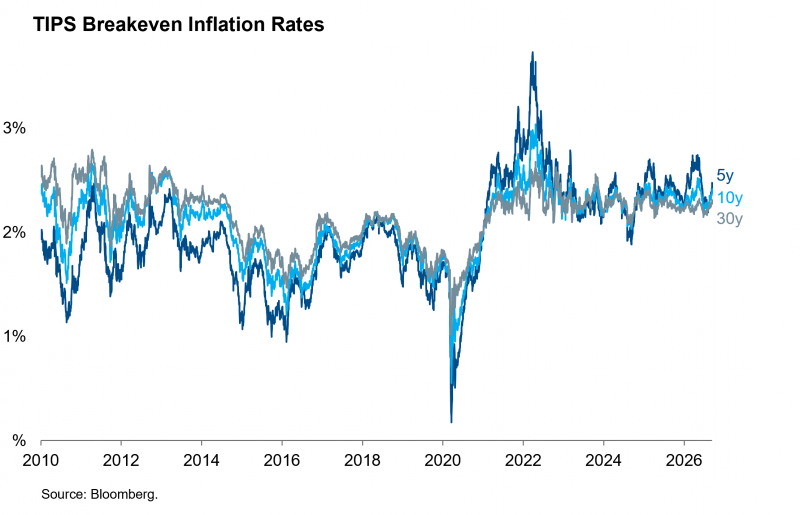
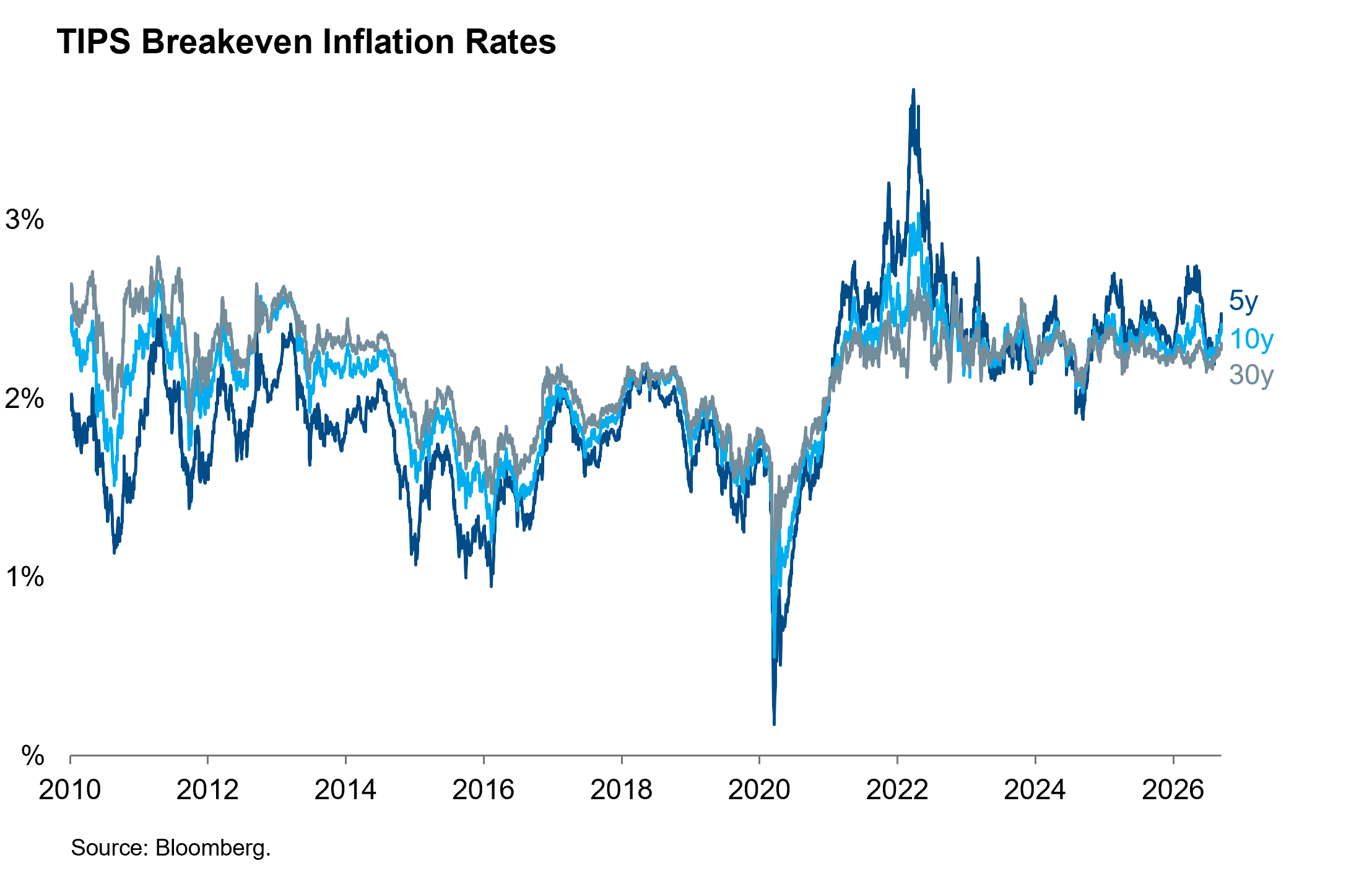
Energy inflation is the primary threat at the moment, and rate hikes will do nothing to address it. We are cognizant of the risk that inflation expectations could de-anchor after more than five years of above-target inflation, but we do not see any sign of it happening. TIPS breakeven inflation rates have remained remarkably stable since 2023 in the 2.25–2.50% range (remember that breakevens reflect CPI inflation, which typically runs about three tenths of a percent above PCE inflation). We all owe a huge debt of gratitude to Chairman Volcker and his successors for the remarkable stability of inflation expectations throughout this inflation crisis.
The question for the Fed is not “would you like to fine tune inflation exactly back to 2%?” Everyone would answer that question in the affirmative! But the Fed’s tools are not that precise. There are two real-world questions for policymakers considering rate hikes this week. First, do you feel it necessary to deliver a hike to burnish your credibility even though it won’t impact the primary source of inflation? Second, do you think that the underlying inflation trend is so problematic that you’re willing to put millions of Americans out of work and risk a recession to fight it? The Phillips Curve is flat, so reducing inflation through demand-side monetary tightening would likely require a meaningful increase in the unemployment rate. We think the answer to both of those questions is no, but reasonable minds can disagree.
We can imagine a Fed communications strategy that would have allowed the Fed to leave rates unchanged this week without damaging their credibility. Chairman Warsh has not pursued that communications strategy. Instead, he has expressed a resolute commitment to price stability but failed to explain a credible plan to deliver it. He allowed markets to price a 40% chance of a hike ahead of the July FOMC meeting and then left rates unchanged. His Jackson Hole speech was the best of his tenure because it cleaned up some of his earlier misstatements and finally revealed some information about his reaction function, but even that speech fell short of signaling a clear intention to hike. Since then, oil prices have risen back over $105, payrolls and CPI have both printed strongly (albeit with some distortions) and the odds of a hike on Wednesday have risen to 90%. We can only speculate about Warsh’s intentions given his reticence, but we think his motivation since June has been to hold rates steady and hope that the economic data obviated the need for a hike. He has now lost that gamble.
If the FOMC delivers a dovish surprise by leaving rates unchanged this week, some market participants will accuse Warsh of being the Fed Chairman who cried wolf twice in a row. This could actually damage their credibility and likely exacerbate the selloff at the back end of the yield curve. It is rather ironic that a Fed Chairman intent on freeing himself from the shackles of forward guidance is now constrained by market expectations sitting at 90%. That tension introduces some small risk that Warsh either dissents in favor of a hold or steers a majority vote for a hold, but we would be surprised to see either of those outcomes. It didn’t have to be this way, but given the communications, er, journey that Chairman Warsh has led us on, we believe that the safer choice at this point is to meet market expectations by delivering the rate hike.