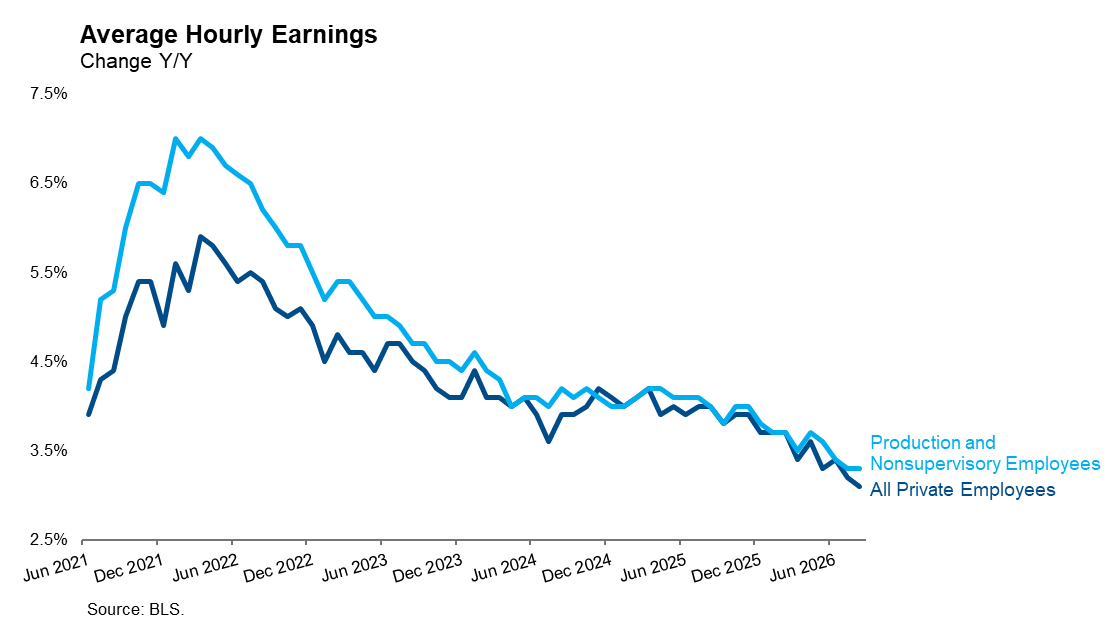



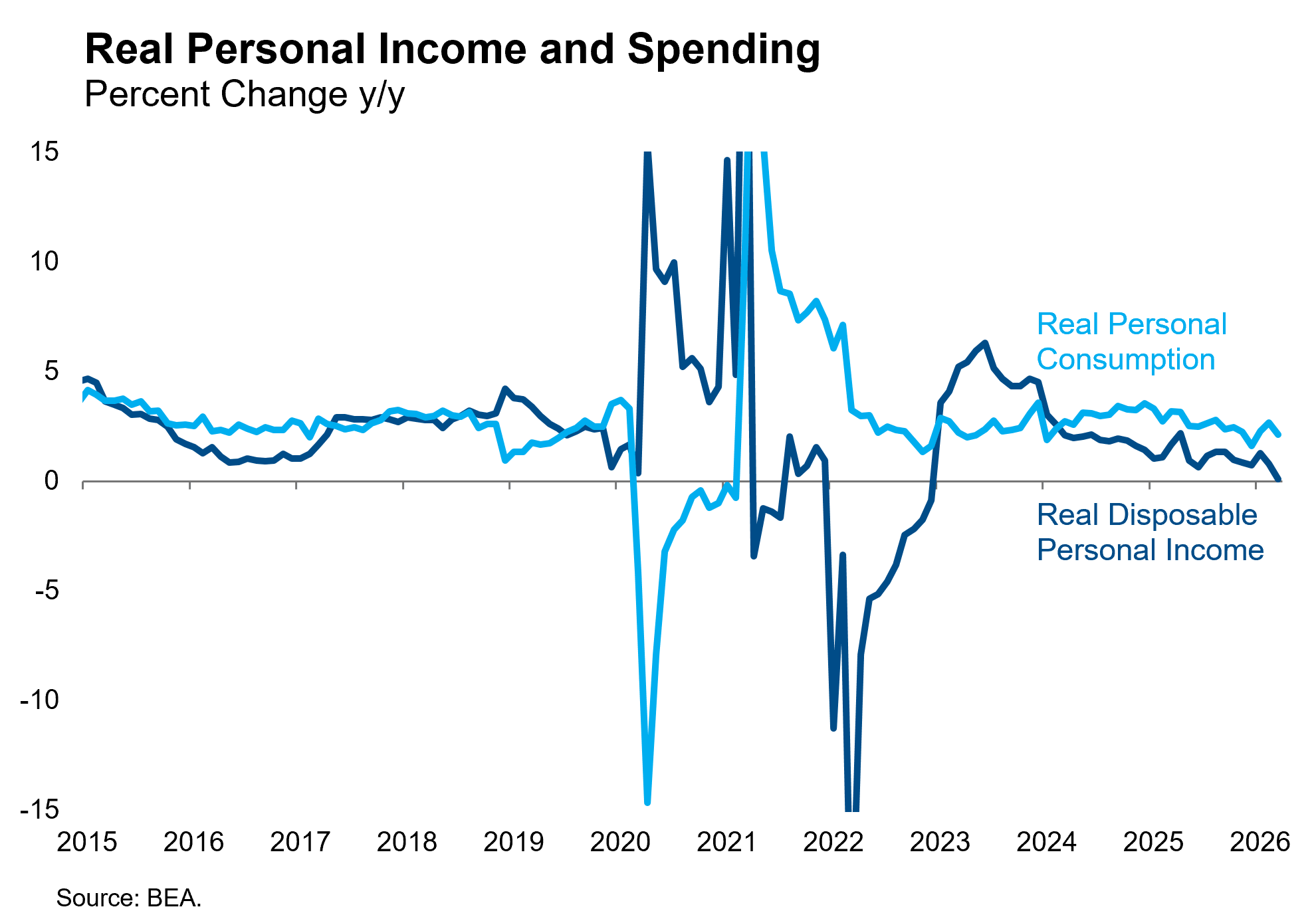
New personal income and spending data released this week highlight a point that we discussed during our recent economic webinar. Real disposable income declined by 0.1% in March–the second consecutive monthly decline and the sixth out of the last 11 months. Consumers did not hold back for want of income, as real personal consumption expenditures increased by 0.2% in the month. This continues a trend of real consumption growth outpacing real income growth that has been underway since late 2023.
As consumers stretched to maintain spending despite stagnant income, the saving rate fell to 3.6% in March. This is a new cycle low, and the lowest level since 2008 if we exclude the post-pandemic period, where fiscal transfers caused huge swings in income and savings.
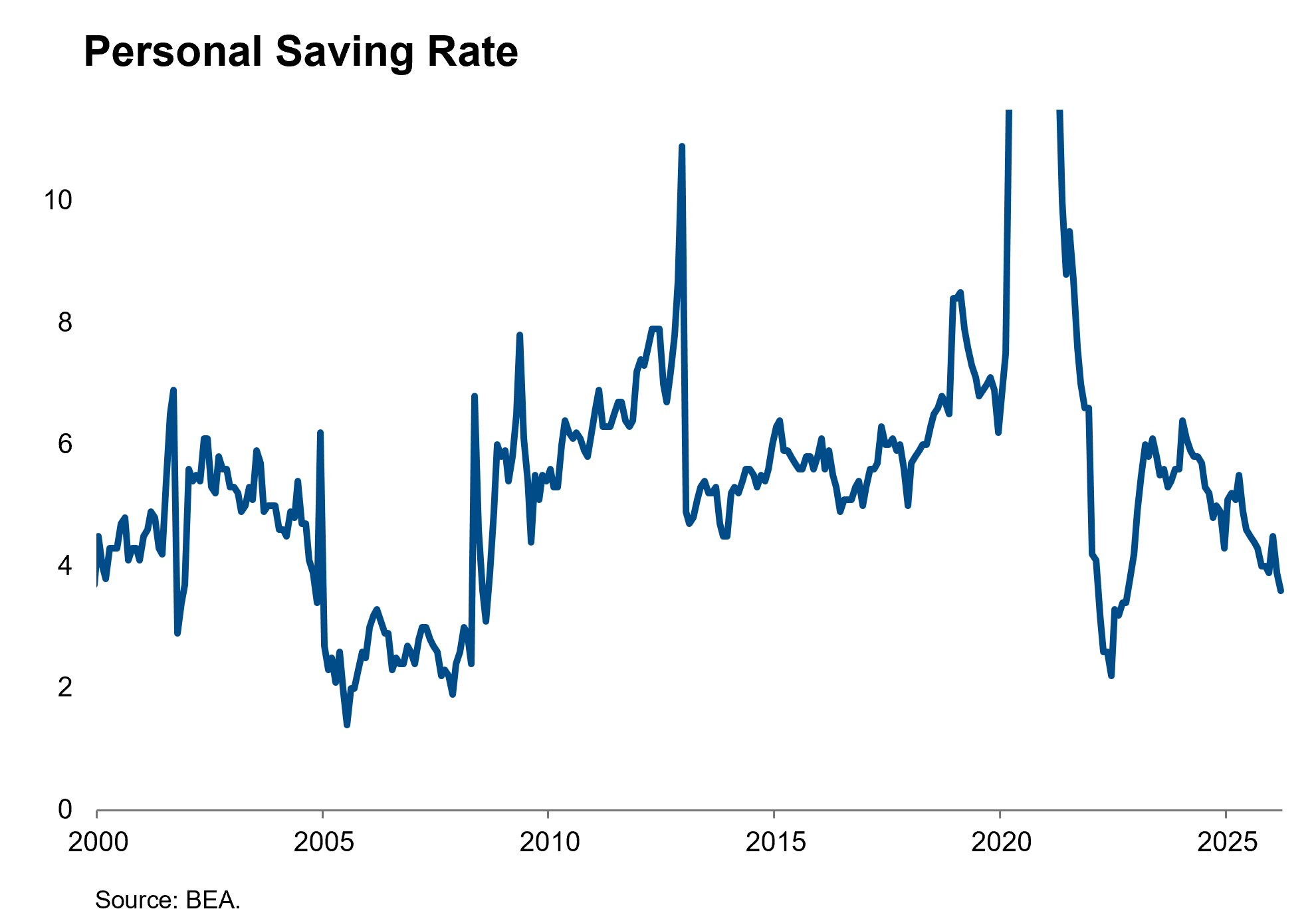
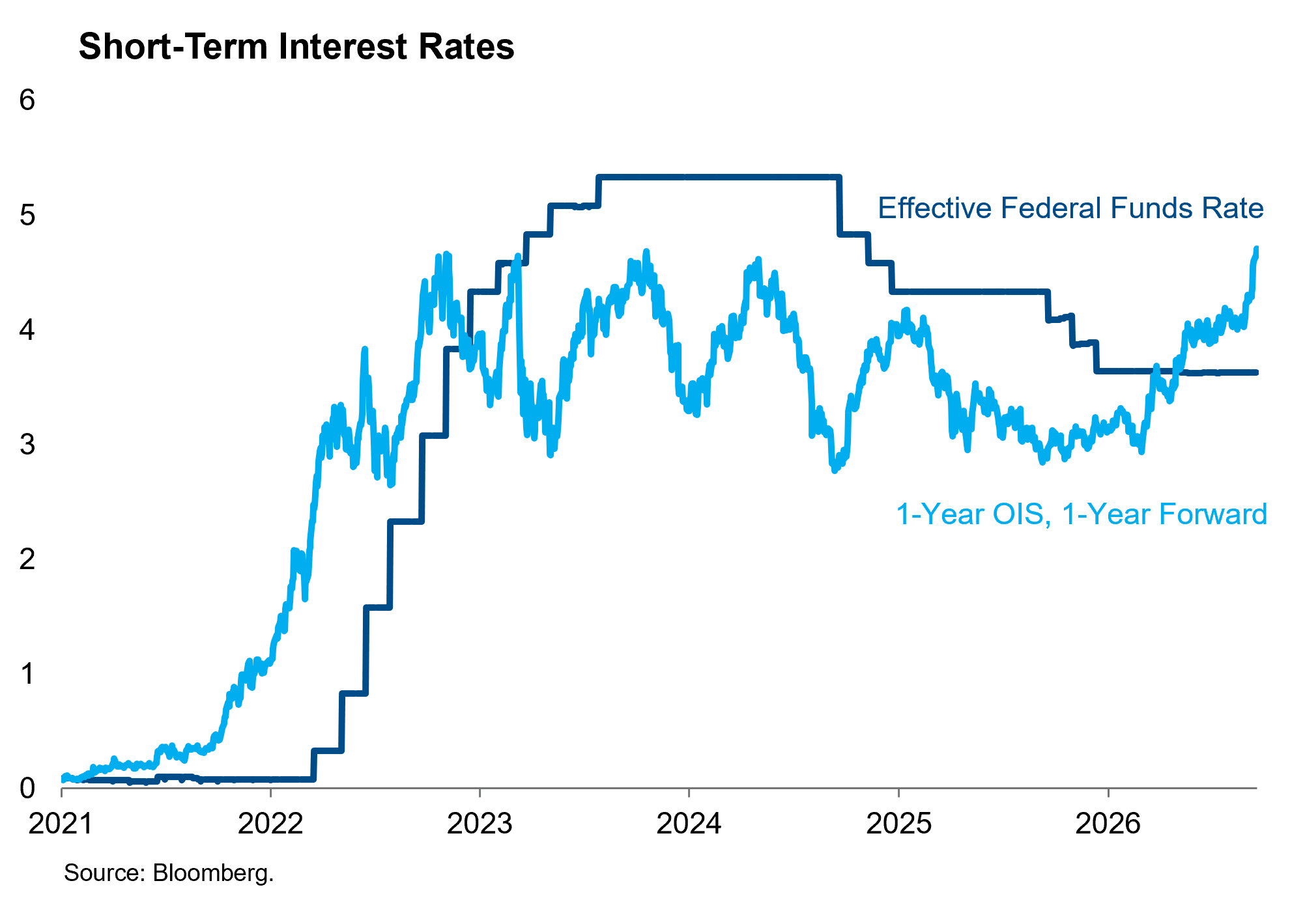
U.S. consumers have shown remarkable resilience in response to the challenging conditions of the post-pandemic economy, but spending cannot continue to grow faster than income forever. This unsustainable pattern will either be resolved by faster income growth (likely supported by a strengthening labor market) or by softer spending. As we discussed in the webinar, higher energy prices will further stress consumer budgets and roughly offset the benefit of larger tax refunds this spring. Even if the war concludes soon, the U.S. consumer is likely to emerge slightly weaker. We do not expect a consumer slowdown to lead the economy into recession, but we anticipate that a weaker consumer outlook will motivate the Fed to resume cutting rates once the war is in the rearview mirror.