
 Subscribe
There will be a lot of frustrated bachelors in China this weekend (yes, China increasingly celebrates Western Valentine’s Day along with a host of traditional holidays devoted to love and relationships). Most people are now aware of China’s looming demographic collapse. The UN projects that China’s working-age population will be cut in half over the next 50 years. The latest data are not promising: Chinese mothers had roughly the same number of babies last year as they did in 1738, when their population was around 150 million.
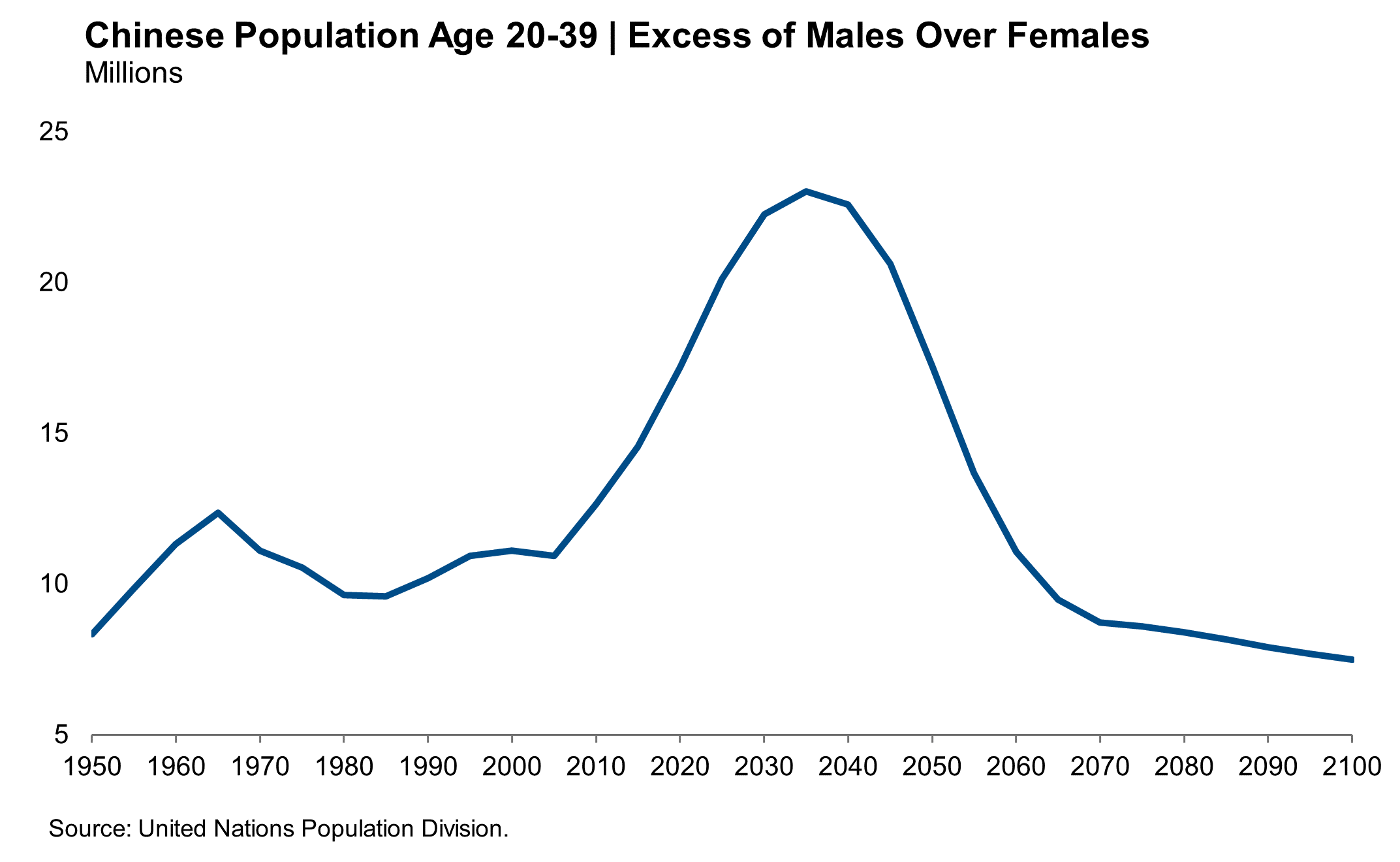
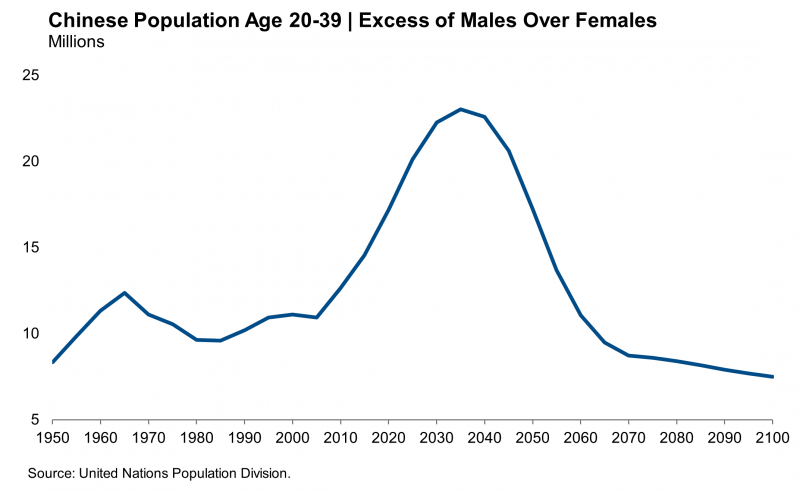
Another feature of China’s demographic profile is an extreme gender imbalance, which will peak in the coming years for the cohort in their prime marrying years. For the next two decades, there will be about 22 million more men than women in their 20s and 30s in China. The gender imbalance is largest in inland rural provinces where gender selection practices were most prevalent. You’d think that Chinese women would have their pick of suitors, but in fact the marriage rate has been steadily declining despite the Communist Party’s, shall we say, unique approach to encouraging women to find a spouse. Surprisingly, the Shanghai Marriage Introduction Organization Administration Association has failed to spark the nation’s romantic intentions.
Do these frustrated bachelors represent a tinder box of social unrest? A ready supply of military manpower? Managing (or reversing) this demographic decline will be an important test for the Chinese Communist Party in the 21st century. Their response may provide lessons for other nations that are following a similar, though less extreme, demographic path.