
 Subscribe
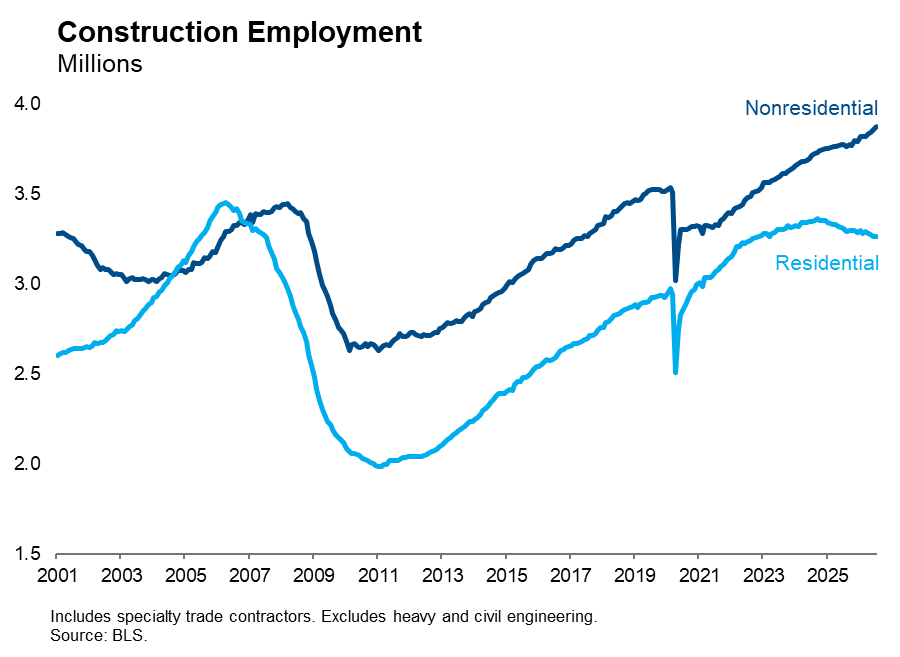
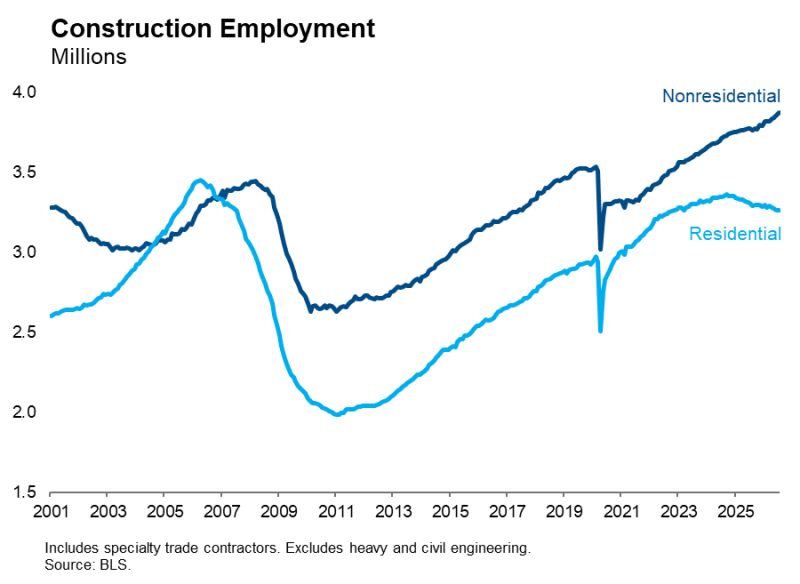
We’re often asked about the impact of AI on the labor market. We’ll probably spend the next decade debating the productivity gains from the technology itself, but for now, the clearest impact can be seen in the construction jobs created by the infrastructure buildout. Nonresidential construction employment has increased by 2.8% over the past year, while residential construction employment declined by 1.3%. A divergence of this magnitude has been observed only once in the history of the data back to 2001, during the residential construction boom-bust cycle of the early 2000s.
Total construction employment is only 5.3% of aggregate payroll employment, so the magnitude is small. Since residential construction employment peaked in September 2024, that sector has shed 96,000 jobs while nonresidential employment has risen by 146,000. Though the AI infrastructure boom is clearly a tailwind for the labor market, the numbers are relatively inconsequential in comparison to more powerful trends like weak hiring, immigration and demographic aging.