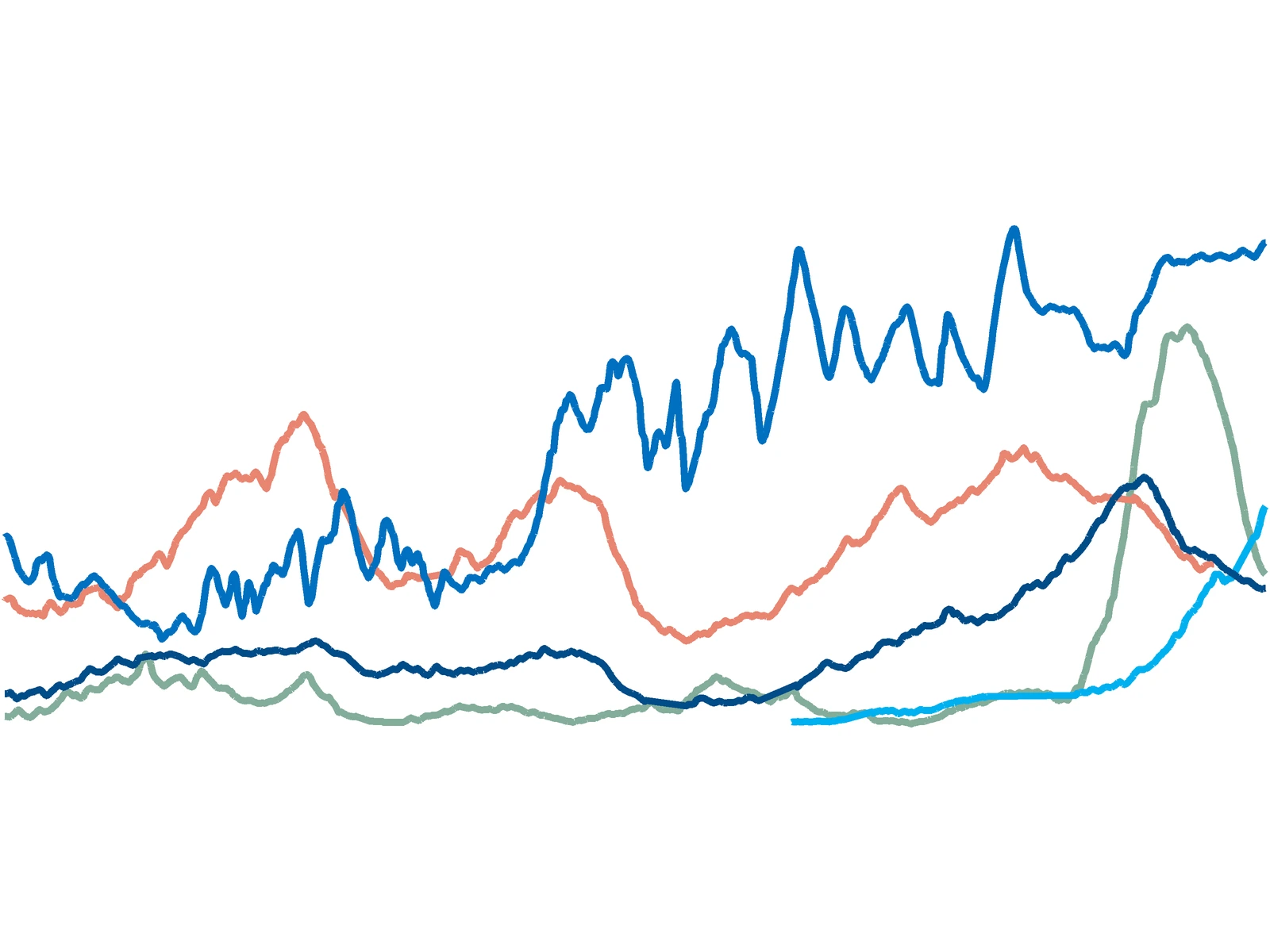



The U.S. labor market gained steam in October. 165,000 jobs were created in the month, and the prior two months were revised higher by 84,000. The three-month moving average of job creation has rebounded from -45,000 in October 2025 to 137,000 in October 2026. The three-month diffusion index has also rebounded strongly above 60%, indicating that positive job growth has broadened across the 250 private sector industries in the payrolls report. The unemployment rate declined by a tenth of a percent to 4.1%.
Nonfarm Payroll Employment
Source: BLS.
Construction employment declined by 3,000 in October as the rotation from residential to nonresidential continued. This month’s data is consistent with our assessment that demand for data center construction labor is largely being filled by excess labor supply from the housing construction market, which continues to struggle under elevated mortgage rates.
Construction Employment | Millions
Includes specialty trade contractors. Excludes heavy and civil engineering. Source: BLS.
Construction wage inflation is accelerating, in part due to compositional effects as workers shift from residential construction to relatively higher-wage nonresidential construction. Thus far, accelerating construction wage inflation has not caused total wage inflation to deviate from its disinflationary path.
Average Hourly Earnings | Percent Change Y/Y
Source: BLS.
The October jobs report provides further evidence that the labor market has rebounded from the weak conditions that motivated the Fed’s insurance cuts in 2025. The new uptrend has stabilized the labor market but so far remains within the Goldilocks zone for monetary policy, neither weak enough to justify cuts nor strong enough to justify hikes. Some will project this uptrend forward and warn of looming wage inflation. We will be watching closely, but as of today we do not yet see sufficient evidence for this argument to sway many votes in the FOMC boardroom.
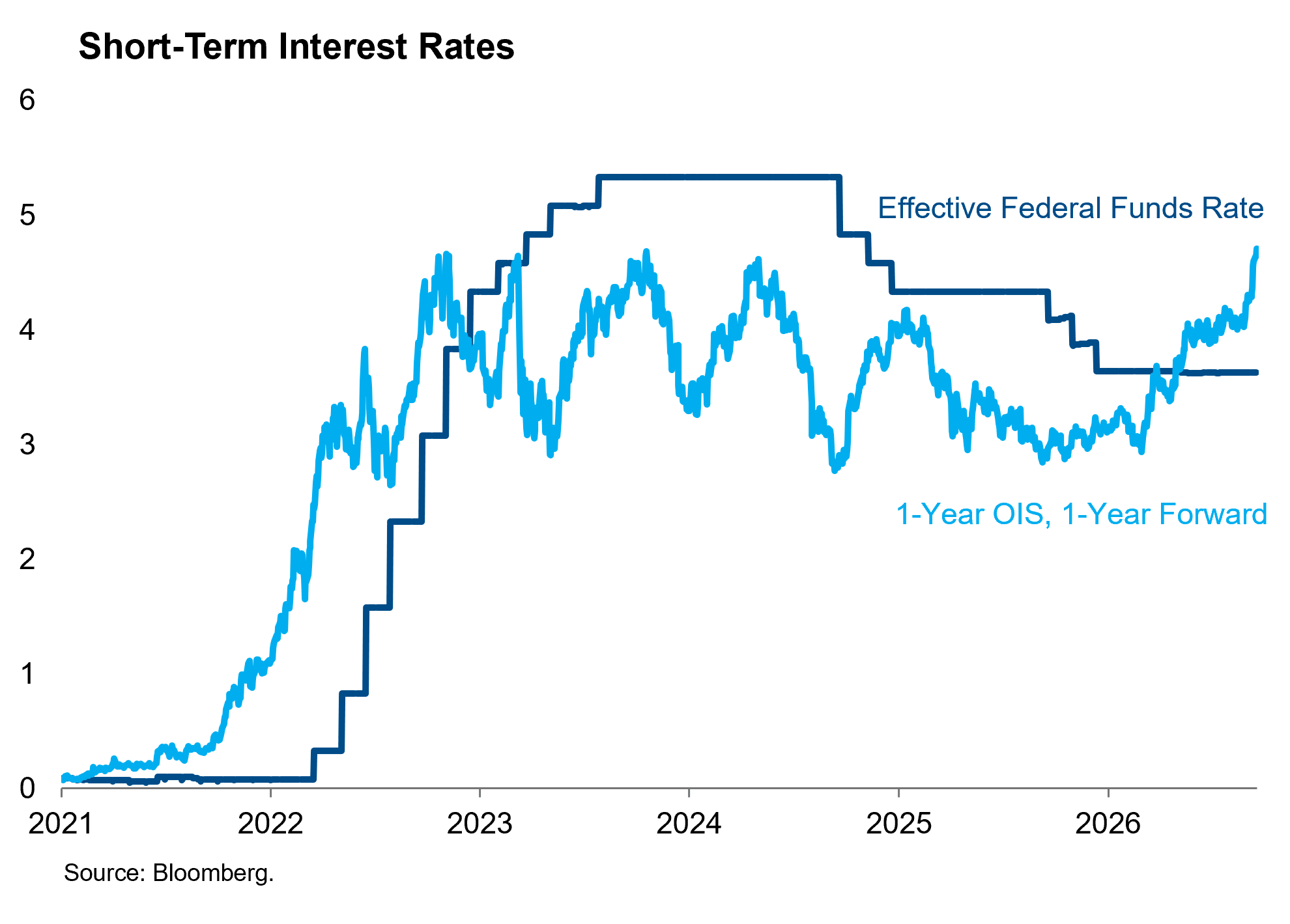
It is perhaps a moot point for the time being, since the Fed is already on track to hike in December due to inflation concerns. We continue to expect (with admittedly low conviction) that the Trump administration will find a way to get oil prices down in time to prevent the Fed from delivering a third rate hike in March. Only after the energy inflation shock has passed will the time come for the Fed to judge whether the labor market itself justifies further policy tightening. We believe that will be a question for 2027. A question that will depend in part on whether the newly elected political class imposes meaningful constraints on the AI infrastructure investment that has boosted labor demand this year.