


In response to a recent post, several readers expressed their surprise that data center construction wasn’t creating more jobs. We understand the sentiment, given the ubiquity of data center construction across the media landscape and ample anecdotal evidence of booming labor demand for the projects. A deeper dive into the construction spending data helps reveal the explanation: data center construction is indeed rising fast, but not enough to offset declines in office, warehouse and manufacturing construction.
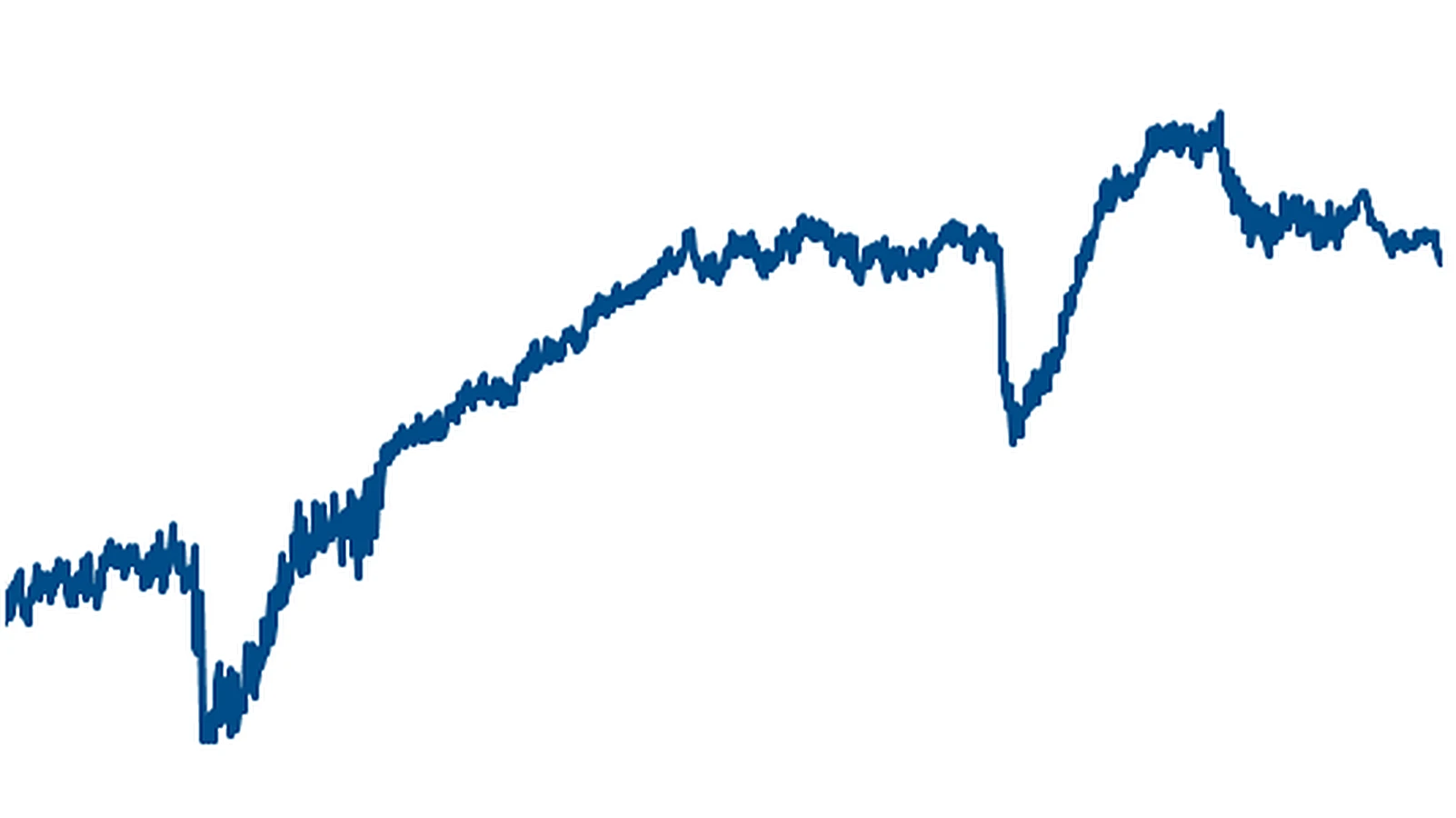
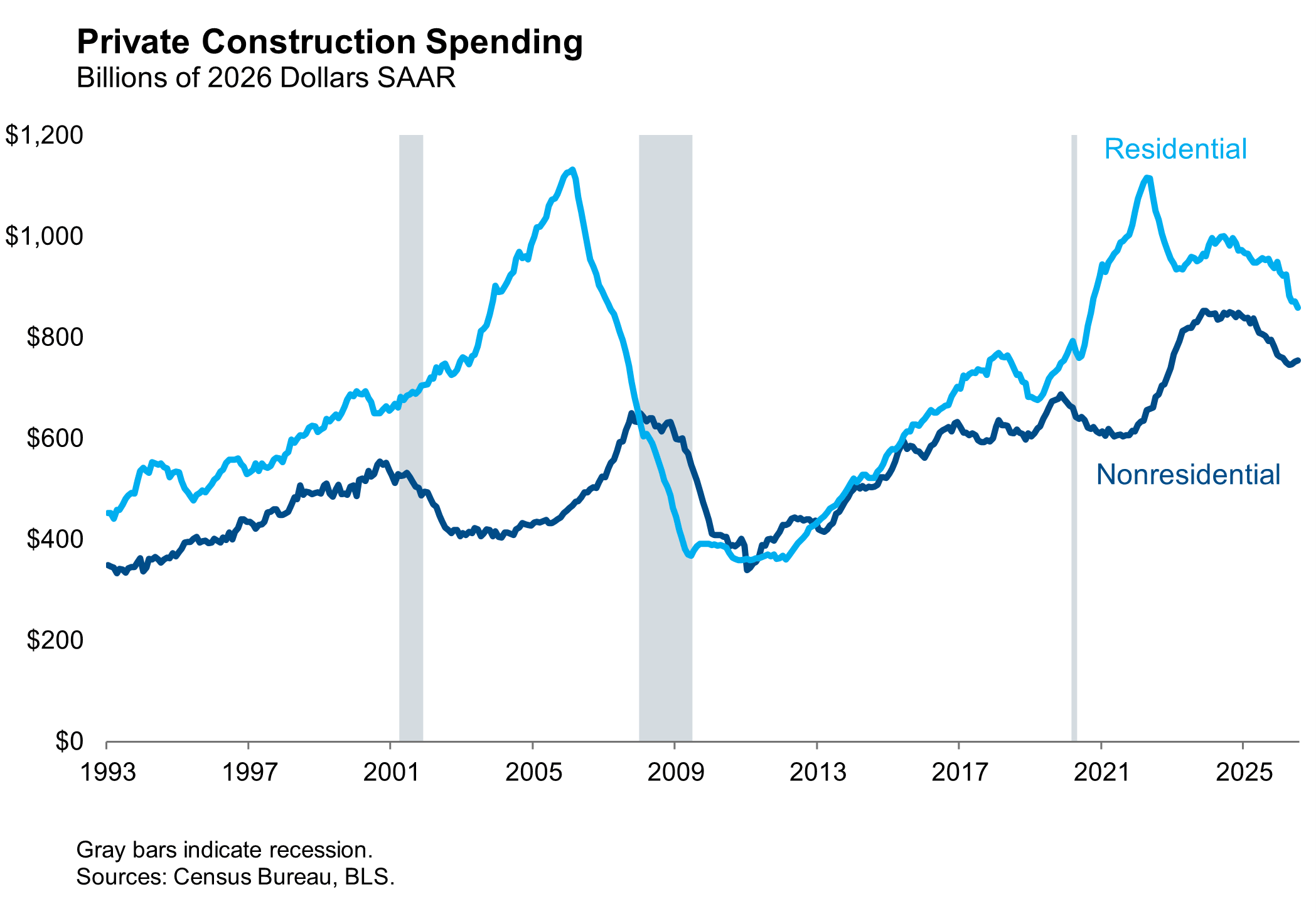
This first chart shows that total nonresidential construction spending has declined by 13% in real terms since the peak in November 2023, the largest real decline on record outside of a recession (in the history of the data back to 1993). Residential construction activity has also contracted materially in real terms since 2021 as rising home prices and mortgage rates pushed housing affordability to multidecade lows.
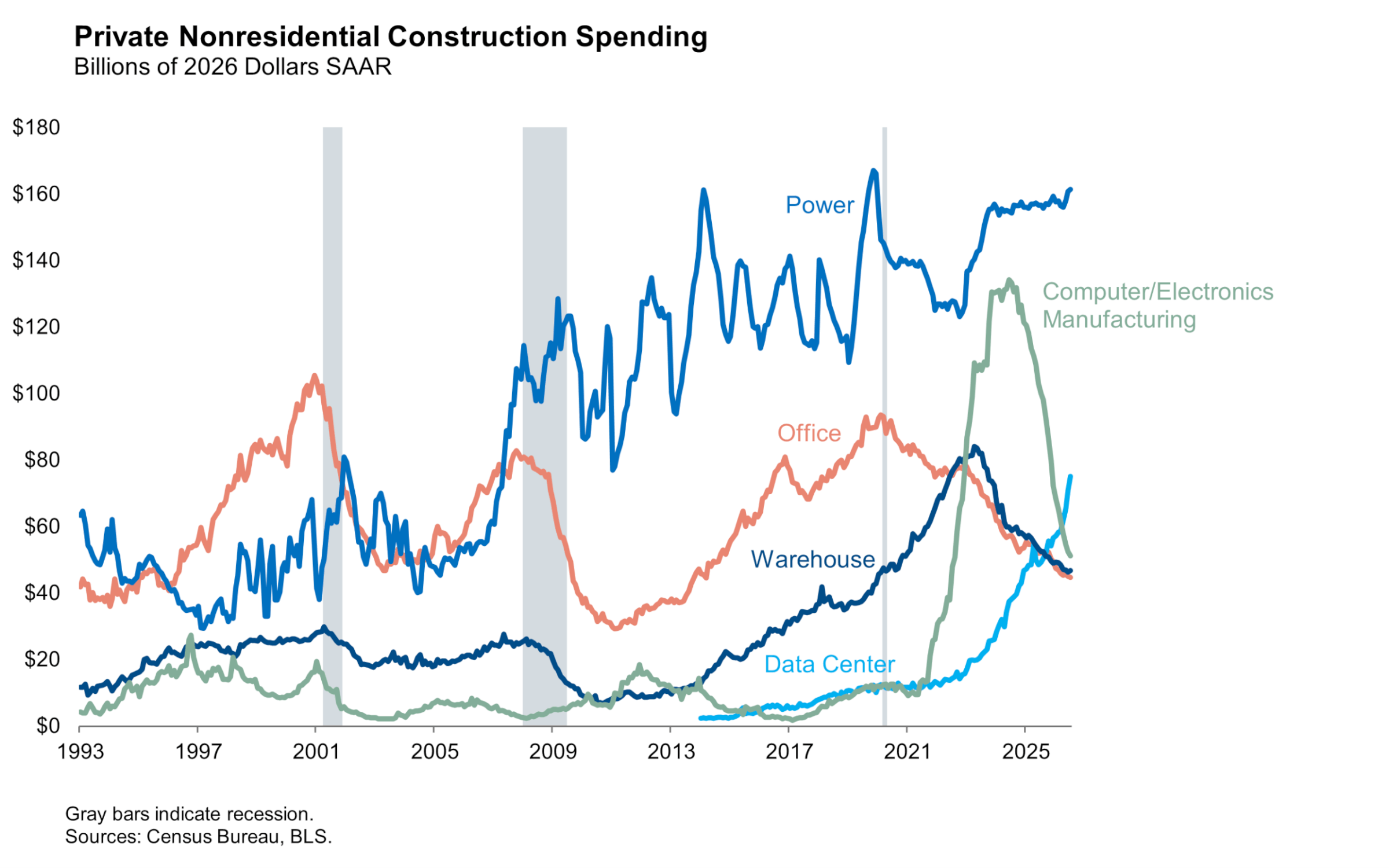
The Census Bureau’s construction spending data provide considerable detail on the composition of spending in the nonresidential sector. The second chart below shows selected components and reveals several powerful trends:
- Office construction has been steadily contracting since the pandemic caused widespread reassessment of physical working arrangements and real estate needs.
- Warehouse construction boomed during the lockdown-era surge in goods consumption and then busted when the economy reopened and consumption swung back to services.
- Computer and electronics manufacturing took off from 2022 to 2024 with support from generous subsidies appropriated by the CHIPS Act and Inflation Reduction Act, then collapsed as the Trump administration paused green energy projects and the construction phase of several chip fab megaprojects came to an end.
- Data center construction has surged in the last few years but has only recently surpassed the spending levels of the other sectors mentioned above. We should note that the Census data account only for the value of the building, and not the extremely valuable computer equipment inside it. In a typical data center, semiconductors and other equipment account for almost two-thirds of the total value of the project. This helps explain the disconnect between announced hyperscaler capital expenditures plans in the hundreds of billions this year and the $75 billion annual rate of data center construction shown below.
The AI buildout is mind-blowing in scale, potentially surpassing historical infrastructure projects like the Marshall Plan, the interstate highway system and the Apollo space program. This frenetic pace of spending has raised legitimate concerns about overheating and demand-pull inflation. Some of this inflation has already arrived in semiconductors and other computer equipment, but these components represent less than 1% of the Consumer Price Index.
AI—both the technology itself and the infrastructure investment that enables it—will impact the American economy in profound ways for many years to come. Data center construction is the leading edge of that impact today. We are fortunate that this surge in demand for data centers is arriving at a time when falling demand for offices and warehouses is creating spare capacity in the construction sector. Reallocating that spare capacity will not be frictionless, given the localized nature of construction. There may be pockets of labor shortages in certain geographies. But the existence of that spare capacity reduces the risk of widespread demand-pull inflation in the construction sector.