

 Subscribe
NISA Chief Economist Stephen Douglass was recently interviewed by The Wall Street Journal to discuss what’s driving the move in yields and what the latest activity data may be signaling.
The U.S. economy continues to show resilience in the face of increased borrowing costs, elevated inflation and tariffs, defying higher Treasury yields and a Federal Reserve rate increase. The yield on the 10-year Treasury note climbed this week to nearly 5.2%, reaching highs not seen in nearly 20 years.
Douglass pointed to the S&P Purchasing Managers’ Index report as an important data point, saying “the S&P report yesterday was eye-opening for me.”
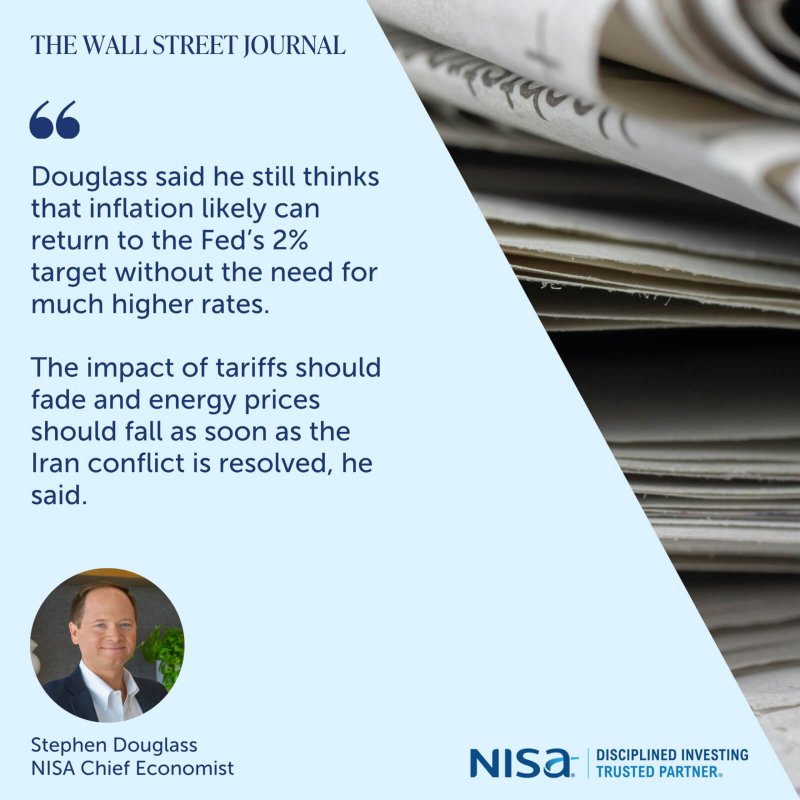
The article adds, “Douglass said he still thinks that inflation likely can return to the Fed’s 2% target without the need for much higher rates. The impact of tariffs should fade and energy prices should fall as soon as the Iran conflict is resolved, he said.”
Douglass acknowledged a growing risk that private-sector demand could pick up enough to “cause an overheating,” creating more durable inflation pressure.
Before August inflation data were released, many officials at the Fed shared Douglass’s optimism that inflation would reach the 2% target on its own. When it was revealed prices were still moving up too fast, the Fed raised rates and is expected to have at least one more before the end of the year.
Read the full article here.