

Derivatives Market Overview
December 2025
Funding Markets
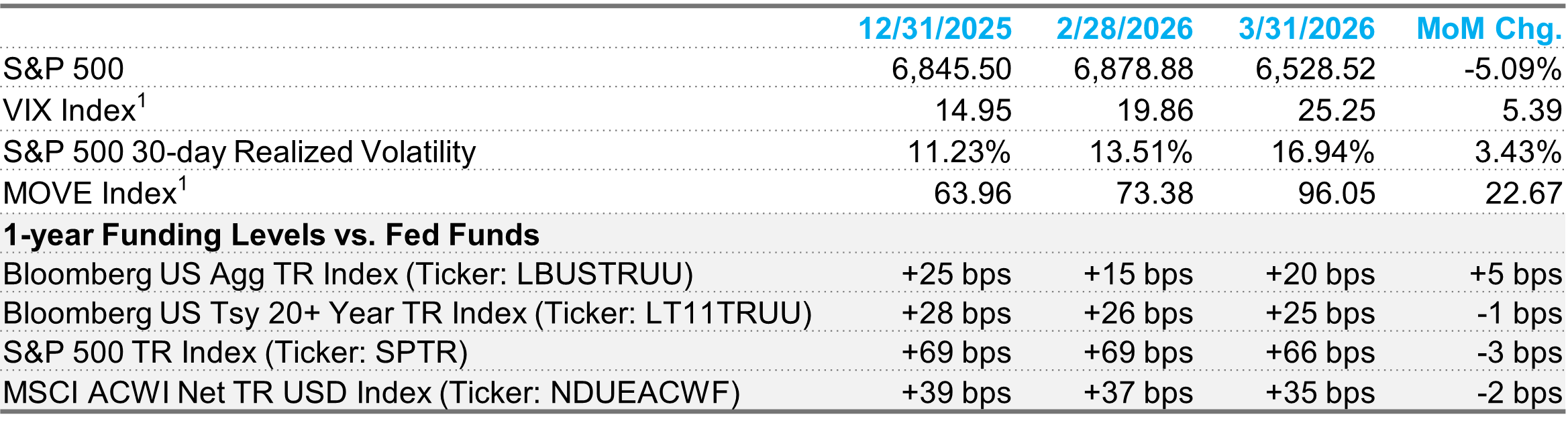
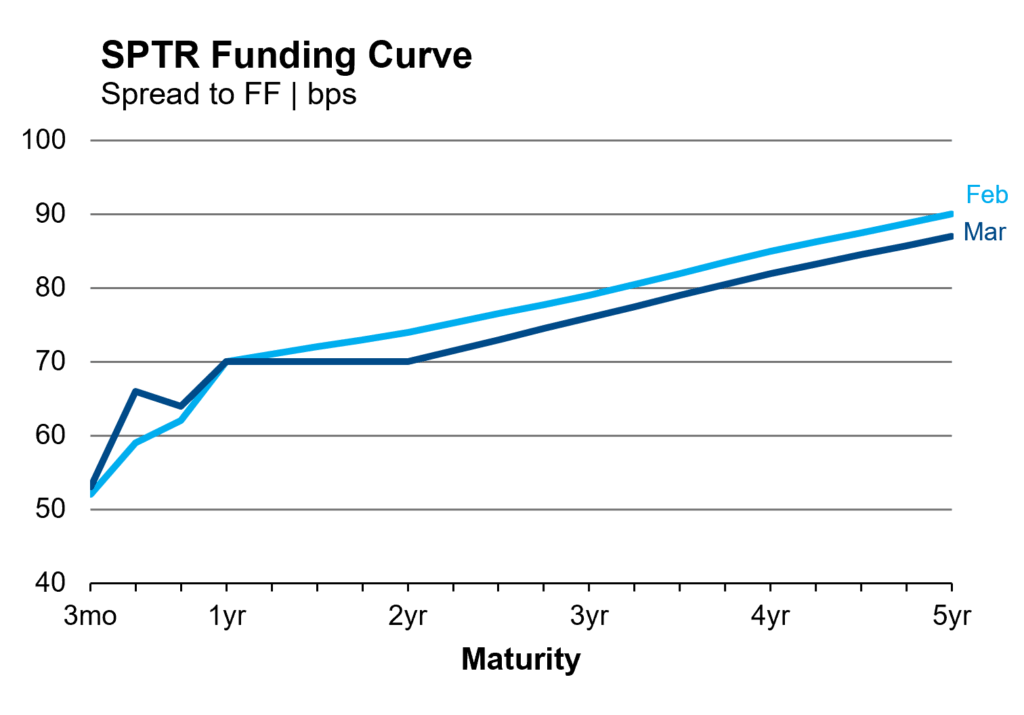
The year-end S&P 500 Total Return Index (SPTR) December/March forward starting swap levels tightened significantly during December, decreasing from Fed Funds +100 bps to Fed Funds +60 bps. Despite elevated swap levels during most of the year, equity funding did not realize the same level of year-end pressure and volatility that was experienced in late 2024.
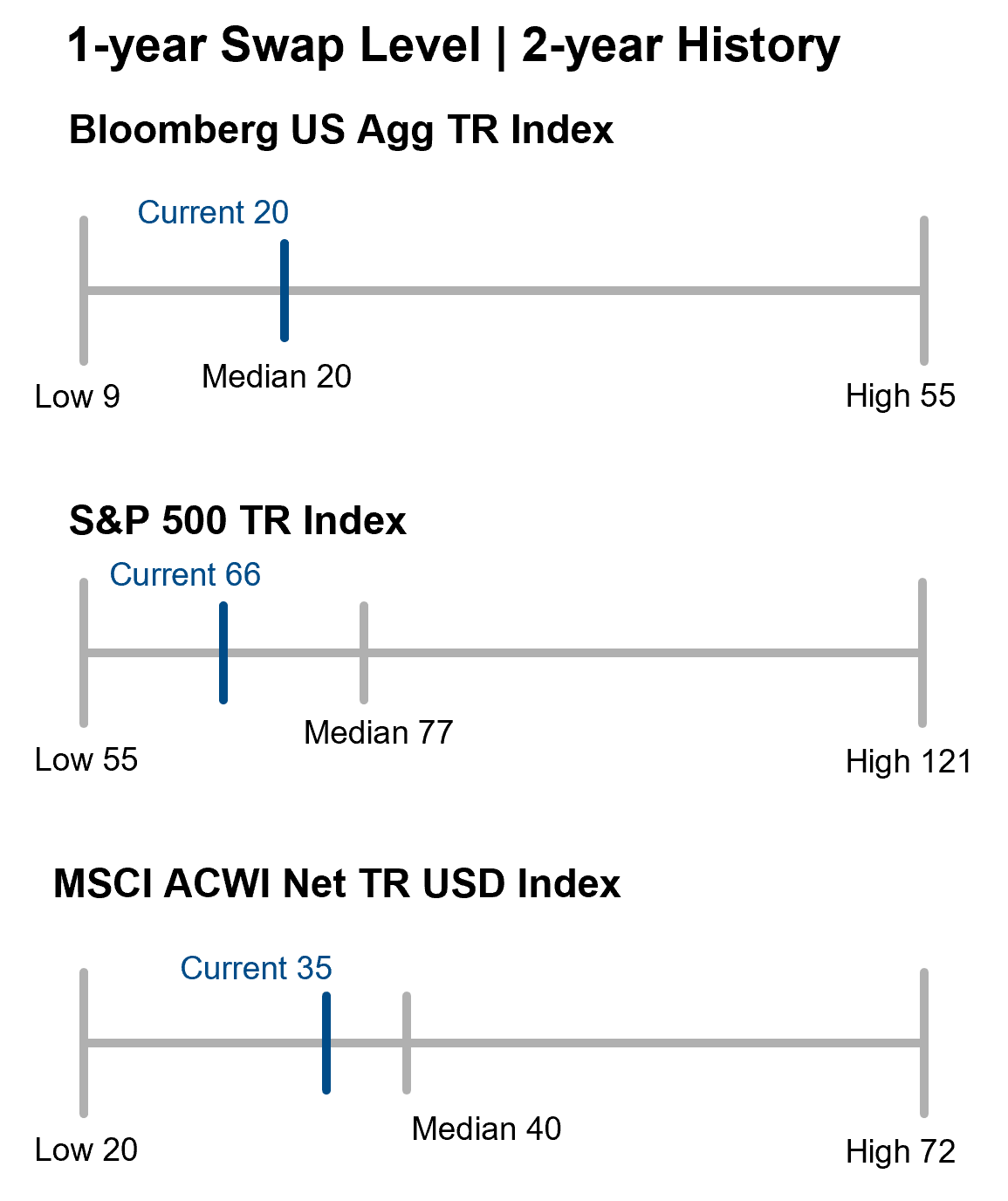
One-year funding levels ended the year near the median level of the prior two years across equity and fixed income markets.

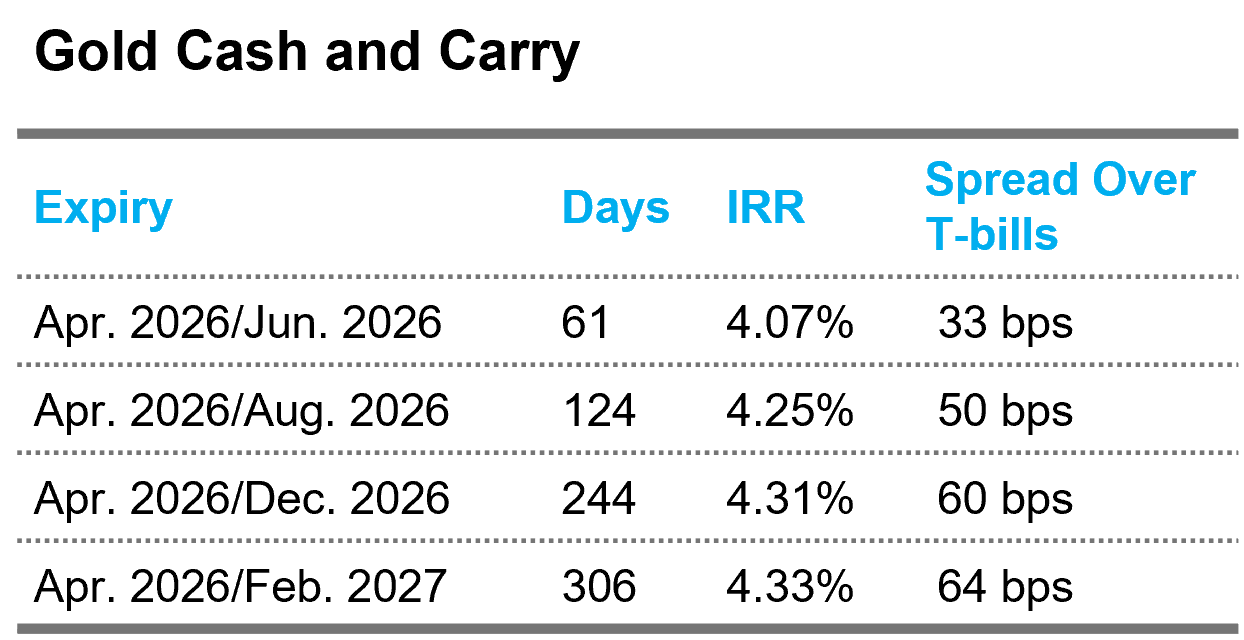
Gold Cash and Carry

Cash-and-carry strategies seek to earn a positive financing spread after adjusting for carrying costs. The strategy buys a near-dated futures contract (e.g., January 2026) with the intent of taking delivery of the physical asset and sells a far-dated futures contract. The financing levels in the table take into account the storage costs associated with taking physical delivery of gold.
Silver Derivatives Markets

Key derivatives markets for silver include the forward market that primarily trades out of London and the futures market that trades on CME Group’s COMEX exchange in New York. With silver extending its extraordinary 2025 rally during December amid heightened volatility, significant discrepancies between the respective derivatives markets have formed. While the silver forward curve is materially backwardated, the futures curve remains in contango. This has resulted in a material difference between London silver forward prices and New York silver futures prices further out on the curve.
Volatility Markets

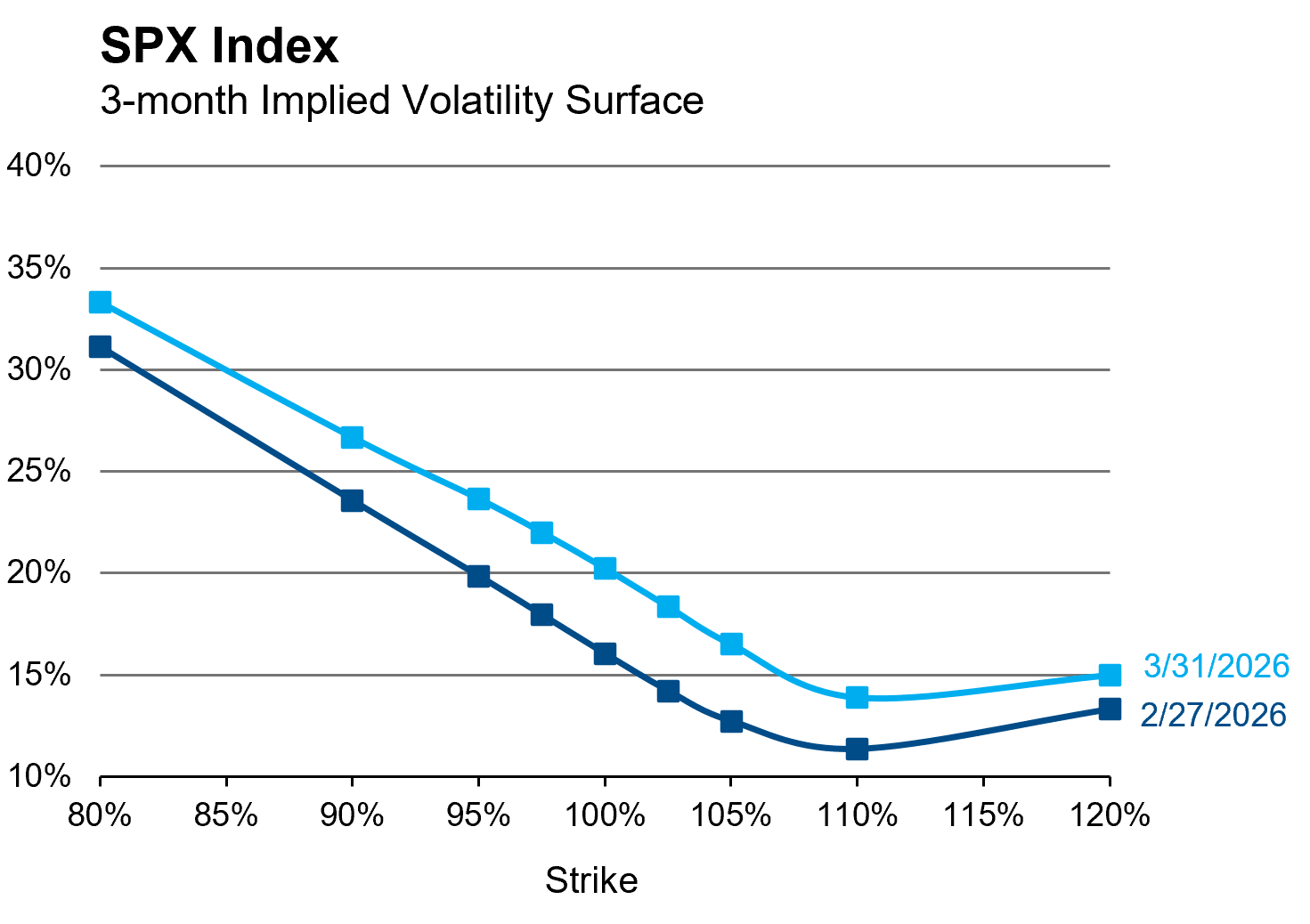
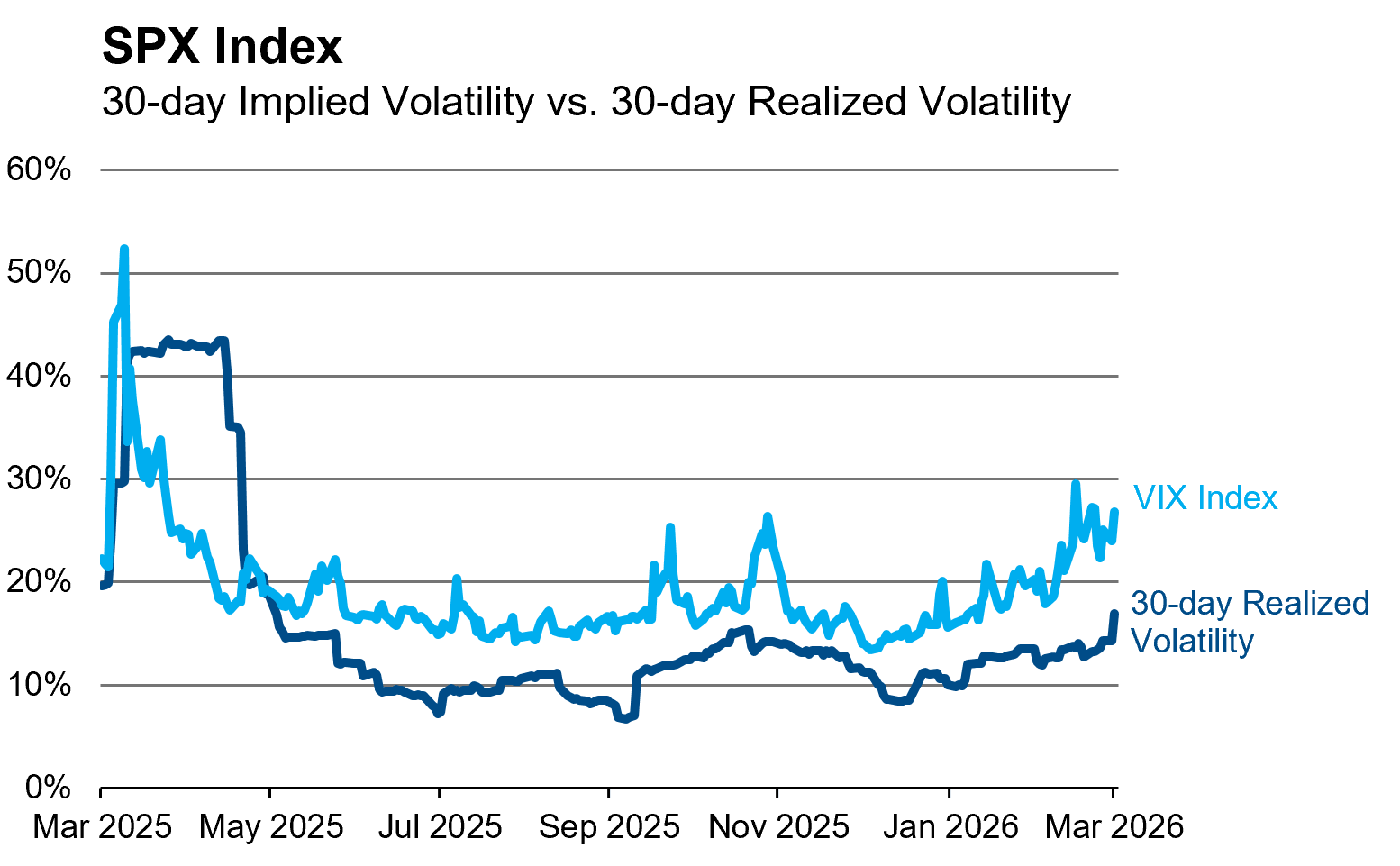
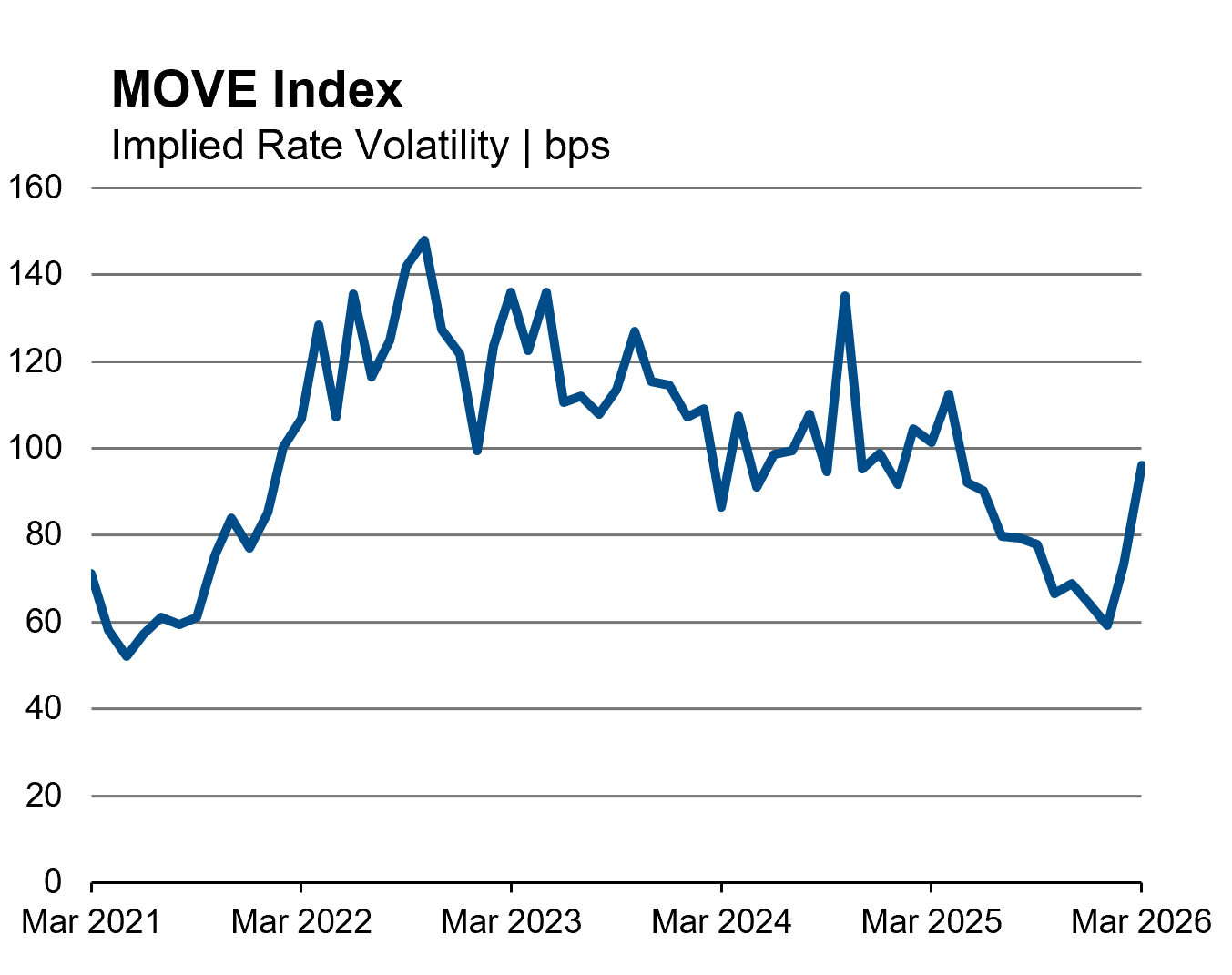
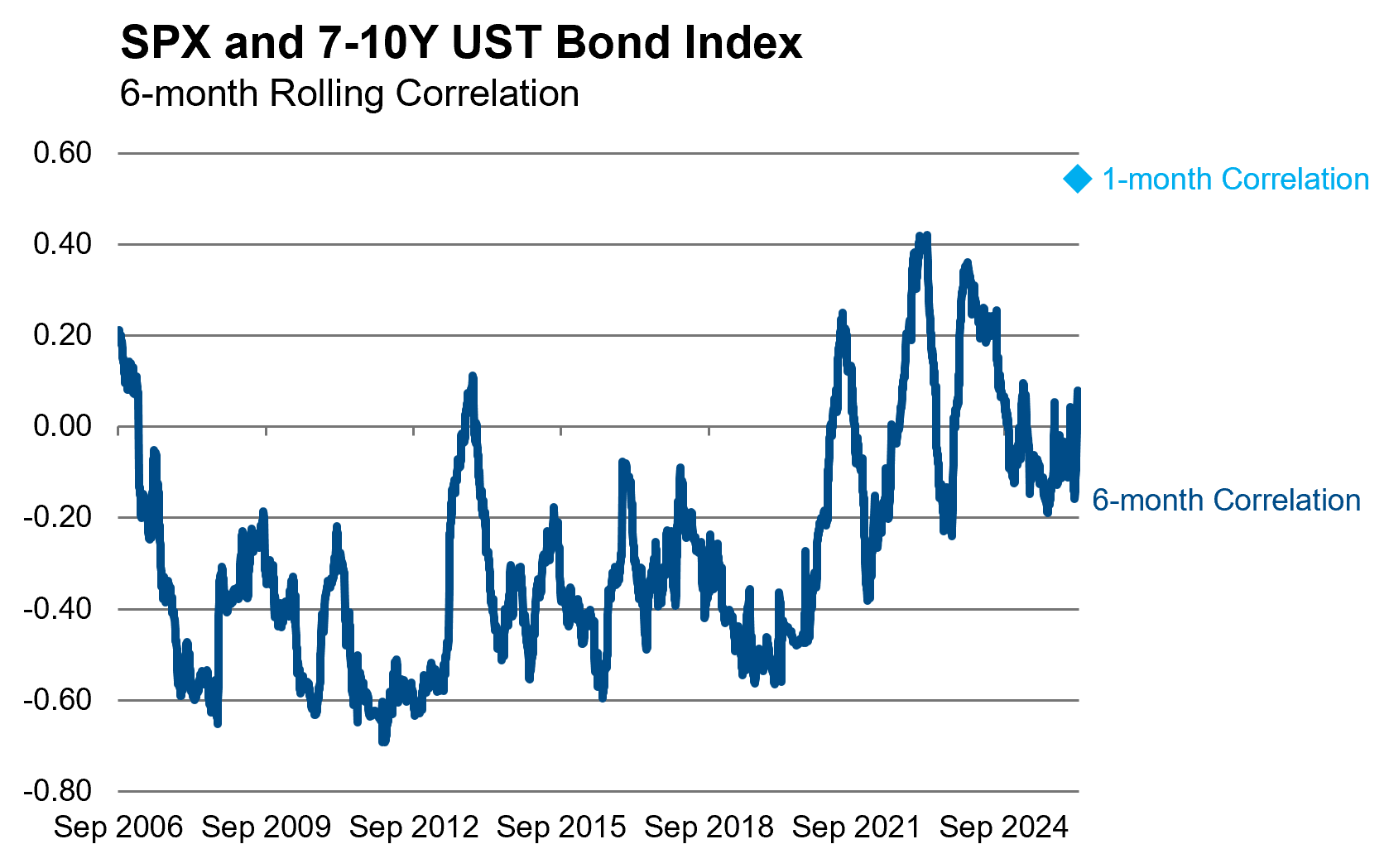
The SPX ended the month nearly flat for the second consecutive month. Both implied and realized equity volatility decreased during the month, with VIX reaching its lowest levels of the year during December. Implied rate volatility continued to trend lower and the MOVE Index fell to the lowest level since October 2021.
What Stands Out
Commodity benchmarks, specifically the BCOM Index and S&P GSCI Index, will undergo their annual rebalancing process to 2026 target weights during the January roll period beginning on January 8. Keep in mind, these benchmarks use different weighting methodologies that result in materially different commodity allocations. The BCOM Index factors liquidity into its weighting scheme and also limits the weights to individual sectors. Due to the application of sector limits, the annual rebalancing of BCOM tends to result in reducing exposure to sectors that have outperformed. With gold prices up 64% and silver prices up a remarkable 141% during 2025, a key impact will be a reduction in the weight of precious metals within the BCOM Index. For investors with significant exposure to the benchmark, this represents a material shift in underlying exposure to gold and silver within their portfolio. With these markets already experiencing elevated volatility, shifting open interest is another potential source of market impact during January. Cocoa’s re-inclusion to the BCOM Index is also noteworthy as index-tracking activity may add an estimated 27% to open interest in the commodity.[2] [1] Please refer to the glossary for more information.
[2]NISA’s estimate is based on an assumed $120b of BCOM Index exposure and current open interest as of 12/31/2025.
BCOM Index applies a 1/3 weight to production and a 2/3 weight to liquidity. Individual commodities are capped at 15% of the index with 25% sector limits, and 33% Commodity group limits.
S&P GSCI Index weights commodities based on production volumes. Individual commodities are capped within their sector, but sector allocations are not limited.
Data as of December 31, 2025. Sources: Bloomberg Index Services Ltd., Bloomberg, iVolatility, dealer indications, NISA calculations.
Glossary
What is the MOVE Index? The ICE BofA MOVE Index measures U.S. bond market volatility by tracking a basket of OTC options on U.S. interest rate swaps. The index tracks implied normal yield volatility of a yield-curve-weighted basket of at-the-money one-month options on the 2Y, 5Y, 10Y and 30Y constant maturity interest rate swaps. The index value is equal to the average of the implied normal yield volatility of the four options, where the 10Y option is given a 40% weight, and the other components each hold a 20% weight.
What is the VIX Index? The VIX Index is a calculation designed to produce a measure of constant 30-day expected volatility of the U.S. stock market derived from mid-quote prices of the S&P500 Index call and put options.
What is the VIXEQ Index? The Cboe S&P 500 Constituent Volatility Index (“VIXEQ Index”) is designed to measure the market-cap-weighted 30-day implied volatility of a basket of S&P 500 constituents. While the VIX Index measures implied volatility using SPX options prices, the VIXEQ Index is based on single stock options prices.
What is a 3Mx10Y USD Swaption? A swaption is the option to enter into an interest rate swap. The 3Mx10Y USD Swaption is a three-month option giving the purchaser the right to enter into a 10-year interest rate swap.
This overview is for informational purposes only. The information has been obtained from sources considered to be reliable, but the accuracy and completeness are not guaranteed. There is no assurance that any economic trends mentioned will continue or that any forecasts will occur. Economic data are as of the dates noted.
Disclosure Information
By accepting this material, you acknowledge, understand and accept the following:
This material has been prepared by NISA Investment Advisors, LLC (“NISA”). This material is subject to change without notice. This document is for information and illustrative purposes only. It is not, and should not be regarded as “investment advice” or as a “recommendation” regarding a course of action, including without limitation as those terms are used in any applicable law or regulation. This information is provided with the understanding that with respect to the material provided herein (i) NISA is not acting in a fiduciary or advisory capacity under any contract with you, or any applicable law or regulation, (ii) that you will make your own independent decision with respect to any course of action in connection herewith, as to whether such course of action is appropriate or proper based on your own judgment and your specific circumstances and objectives, (iii) that you are capable of understanding and assessing the merits of a course of action and evaluating investment risks independently, and (iv) to the extent you are acting with respect to an ERISA plan, you are deemed to represent to NISA that you qualify and shall be treated as an independent fiduciary for purposes of applicable regulation. NISA does not purport to and does not, in any fashion, provide tax, accounting, actuarial, recordkeeping, legal, broker/dealer or any related services. You should consult your advisors with respect to these areas and the material presented herein. You may not rely on the material contained herein. NISA shall not have any liability for any damages of any kind whatsoever relating to this material. No part of this document may be reproduced in any manner, in whole or in part, without the written permission of NISA except for your internal use. This material is being provided to you at no cost and any fees paid by you to NISA are solely for the provision of investment management services pursuant to a written agreement. All of the foregoing statements apply regardless of (i) whether you now currently or may in the future become a client of NISA and (ii) the terms contained in any applicable investment management agreement or similar contract between you and NISA.