

Contributor: Stephen J. Douglass
-
More on Tariff Calculations
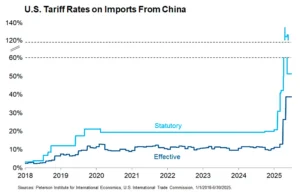
Our prior note on decoupling from China prompted several reader questions about tariff calculations. We stated that the effective tariff on imports from China generally runs well below the statutory rate. The chart below shows those two measures back to 2018 and President Trump’s first trade war. The statutory rate is simply the rate that…
-
June Payrolls Report Justifies the Fed’s Wait-and-See Posture
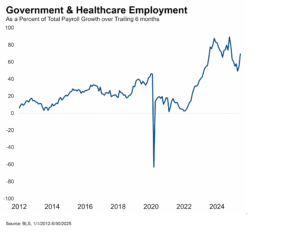
The U.S. economy created an estimated 147,000 jobs in June, well above expectations. The prior two months were revised slightly higher, and the unemployment rate declined from 4.2% to 4.1%. This is a strong print on the headlines. However, the diffusion was exceedingly narrow, with fully 90% of the job creation in June coming from…
-
Gradual Decoupling from China Began in 2018
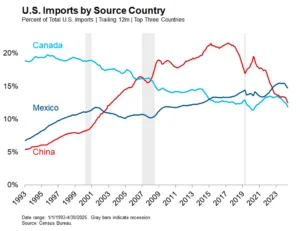
By reducing the tariff rate on Chinese imports from 145% to 30%, President Trump significantly de-escalated his trade war and reduced the left-tail risk of a sudden forced decoupling from China. But remember that the 30% figure represents new tariffs. Those are applied on top of preexisting tariffs, many of which were initially implemented during…
-
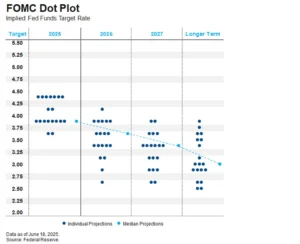
Fed Maintains Wait-and-see Posture
The Federal Open Market Committee (FOMC) left the federal funds rate target unchanged today as expected, maintaining the wait-and-see posture they have adopted since trade policy uncertainty spiked in the springtime. Today’s outcome does not materially change our outlook for monetary policy or the U.S. economy. Our modal expectation remains that the next phase of…
-
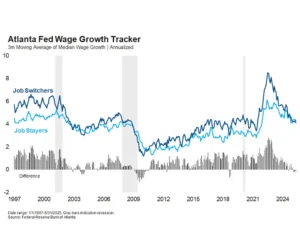
The Returns to Job Switching Have Evaporated
In recent notes, we have highlighted elements of underlying weakness in an otherwise stable labor market. The Atlanta Fed released another such data point this week. Their Wage Growth Tracker improves upon the average hourly earnings data released with each monthly payrolls report by adjusting for compositional changes and calculating wage growth across a variety…
-
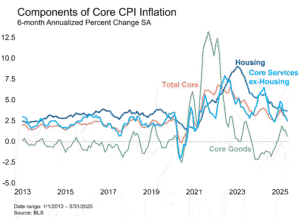
Little Sign of Tariff Inflation in the May CPI Report
CPI inflation printed below expectations in May as isolated signs of tariff-induced inflation were offset by cooler price pressures in autos and other components. Core CPI increased by 0.13% m/m in May, which was lower than the estimates of all 73 economists surveyed by Bloomberg. Core CPI inflation has now fallen to a new cycle…
-
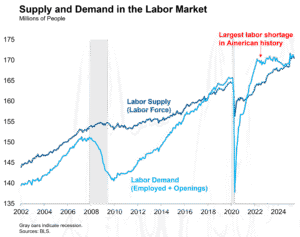
Labor Market Remains Stable in May
The May jobs report showed little change in the stable-but-vulnerable labor market dynamics we have highlighted in recent months. This report does not meaningfully change our outlook for the economy or monetary policy. We maintain our view that the first rate cut will not arrive until January 2026. We did not expect to see much…
-
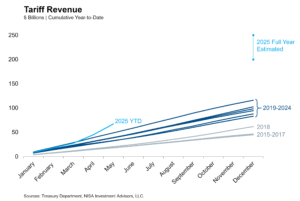
Tariff Revenue Starting to Roll In
Financial markets have rebounded strongly following the de-escalation of President Trump’s trade war, mostly retracing the price declines of April. That sanguinity is understandable but may be premature. The agreements with China and the U.K. leave in place 10% universal tariffs, and those are only just beginning to impact the real economy. It’s easy to…
-
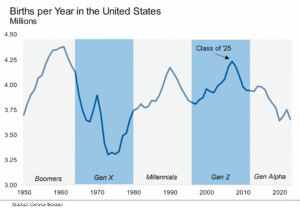
Graduating with Distinction
The high school class of 2025 will graduate with distinction, but not the kind worth celebrating. It is probably the largest graduating class most of us will see in our lifetimes. Many of those who received a diploma this spring were born in 2007. That year saw the most births since the peak of the…
-
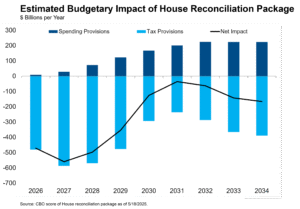
House Reconciliation Package is Even More Irresponsible Than It Appears
The House of Representatives passed their version of the reconciliation bill yesterday by a vote of 215-214. The legislation as written would increase federal deficits by an estimated $2.5 trillion over the next decade, exacerbating America’s fiscal woes even as interest costs reach record highs relative to GDP. But House passage is just one step…