

Contributor: Stephen J. Douglass
-
Divided FOMC Resumes Easing Cycle
A starkly divided FOMC lowered the policy rate by 25 bps today to a range of 4.00-4.25%, resuming the easing cycle that had been paused since January due to inflation concerns. This was an FOMC meeting unlike any other, with one governor serving under the protection of a temporary restraining order delaying her termination and…
-
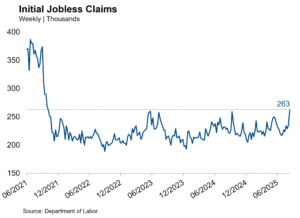
Initial Claims Jump. Inflation Accelerates. Fed on Track to Cut Next Week…
CPI inflation accelerated again in August in services categories as well as tariff-exposed goods. The bigger surprise in today’s economic data was a significant increase in initial jobless claims — a concerning warning sign but too tenuous of a data point to change our labor market assessment. Both data points are consistent with our general…
-
August Payrolls: Yet More Feeble
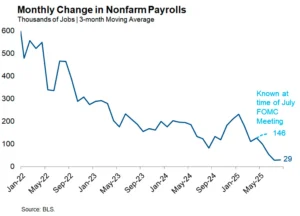
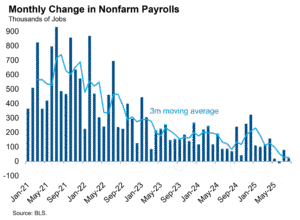
The August payrolls report printed weaker than expected, and the prior two months of job creation were revised lower on net. The June figure received its final revision to -13,000, the first negative print after 53 consecutive months of positive job creation. The July figure was revised higher from 73,000 to 79,000, and the initial…
-
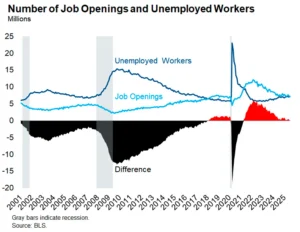
Labor Market Musical Chairs Gets Interesting
The JOLTS data for July appeared consistent with the labor market status quo. There was little to no change in the rates of hiring, quitting or layoffs across the private and government sectors. The July payrolls report has rightfully increased attention on the downside risks to the labor market, but the JOLTS data show that…
-
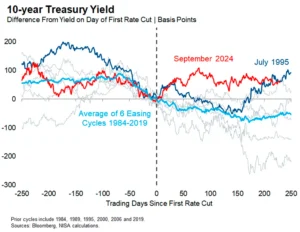
Eroding the Fed’s Independence Could Put Upward Pressure on Treasury Yields
As the Trump administration continues to escalate its pressure campaign against the Federal Reserve, Chairman Powell stuck to the economic script and sent a fairly clear signal at Jackson Hole that the FOMC intends to lower the policy rate at their next meeting in September. Will 10-year yields also decline as the Fed lowers their…
-
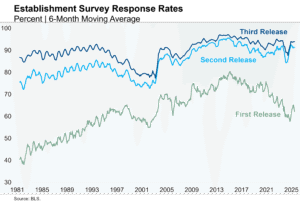
The Response Rate Crisis Is Overblown, for Payrolls Anyway
The large revisions in the July payrolls report have awakened the popular press to the response rate crisis that experts have been monitoring for more than a decade. Important context is sadly missing from the narrative. Response rates to government surveys are indeed falling around the world. It is a serious problem that needs to…
-
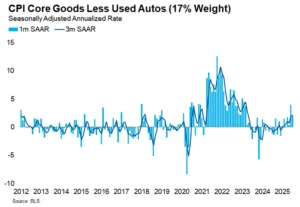
Inflation Accelerates in July, Though Tariff Effects More Muted
The July CPI report showed another acceleration in the pace of core inflation, to a 3.94% annualized rate in the month. This is the highest monthly pace since January and the second highest in the last 16 months. Tariff-induced inflation is still evident in the data, though at a slightly slower pace than June. Services…
-
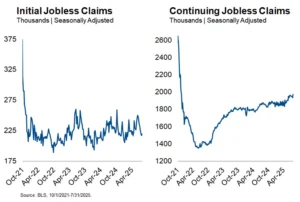
Continuing Claims Hit a New Cycle High
Jobless claims data corroborate our assessment of the low-hiring, low-firing state of the labor market. We economists love the jobless claims data for two reasons. First, the data are collected via hard count of actual unemployment insurance claims, not a survey subject to sampling bias, estimation methods, etc. Second, the data are high frequency, published…
-
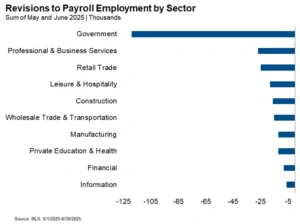
Massive Payrolls Revisions Raise Prospect that Fed May Indeed be “Too Late”
A bombshell payrolls report for July meaningfully changes our perception of the state of the labor market. The report estimated 73,000 of job gains in July, which was only modestly below expectations, but the shocking figure was 258,000 in downward revisions to the prior two months. That is the largest two-month revisions on record except…
-
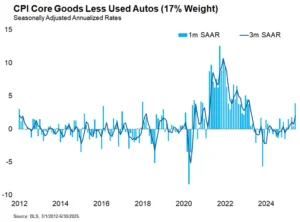
Tariff Inflation Arrives in June CPI Report
Tariff inflation made its highly anticipated debut in the June CPI report. Core CPI increased at a 2.77% annualized rate in the month, slightly above the pace of recent months. This figure was held down by continued disinflation in housing prices, which rose at a 2.12% annualized rate in June, the lowest monthly pace since…